Transparent Lace Wigs: Fit, Material, and Construction Guide

Direct answer: Evaluate a transparent lace wig by checking the actual mesh color, opening size, thread weight, sheen, knot contrast, edge finish, reinforcement, panel coverage, and seams over controlled backings. Transparent is not a universal color or a promise that lace will disappear on every skin tone or under every light. Compare the dry lace before makeup, tint, adhesive, or filter effects, then confirm product-free cap fit and the permitted attachment route. Replace or repair lace that becomes discolored, stained, stretched, torn, rough, delaminated, permanently rippled, or unable to return to its recorded shape.
Define transparent as a color-and-contrast observation
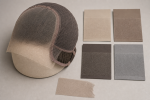
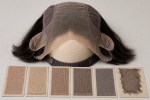
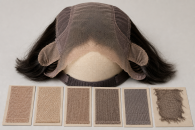
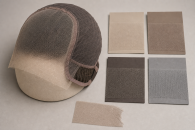
Record the maker's material, named lace color, panel coverage, mesh structure, reinforcement, care directions, and cap model. Photograph the same clean dry lace over matte warm, cool, light, medium, deep, black, and white backings under fixed light. Preserve edge contrast, knot contrast, seam color, sheen, discoloration, transfer, and the difference between front and reverse faces.
Record the named color and actual sample
Preserve the seller's transparent, clear, neutral, light, or other color term exactly and attach photographs from the current wig. Do not assume two products using transparent share a hue, undertone, opacity, thread, or mesh. Compare only under fixed lighting and white balance. A color name is a starting identifier, not a universal match category.
Use a backing sequence for contrast
Lay the supported dry lace over warm light, cool light, medium, deep, black, and white matte cards. Observe mesh color, edge shadow, sheen, opening visibility, knots, seam tape, and reinforced bands. Keep exposure and angle constant. Backings reveal relative contrast but do not reproduce skin texture, movement, oils, makeup, scalp, camera processing, or every environment.
Separate transparency from mesh openness
Record opening shape, thread weight, density, and structure independently from color. A pale mesh can use broad or compact openings; a more visible thread can still transmit backing color. Do not convert visual lightness into a transparency percentage or assume an open mesh is weaker, cooler, or less detectable without supporting evidence.
Map front, side, crown, and nape coverage
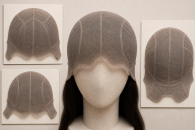
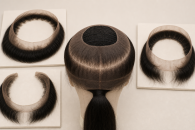
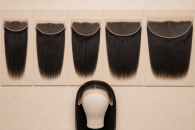
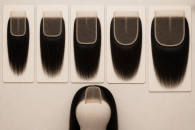
Identify whether transparent lace appears only at the front, extends into a part or frontal, covers the crown, reaches the sides, or forms a full-lace cap. Record every transition into wefts, monofilament, fabric, elastic, and nape reinforcement. The same lace color can behave differently where panel geometry, hair density, or seam layers change.
Inspect reinforcement and folded boundaries
Follow factory folds, seam tape, binding, edge stitching, ear tabs, and nape bands. Reinforcement can improve load distribution yet create additional color, thickness, or stiffness. Look for lifted tape, fray, hardened residue, uneven dye, and corners pulled away from the cap. Do not cut through reinforcement to make an edge appear finer.
Audit knot color and surrounding mesh
View knots from both faces across sparse and dense zones. Record whether knot color, bleaching history, residue, or hair shade changes the contrast more than the mesh itself. Do not use unsupported bleaching, picking, makeup, or tint to erase a contrast observation. Widened openings around knots and missing hair indicate condition, not a color mismatch.
Check discoloration and transfer before installation
Compare the lace with its baseline for yellowing, graying, pink or orange cast, dark adhesive shadow, makeup accumulation, cleanser residue, fabric transfer, and uneven patches. Inspect interior and exterior separately. Do not cover an unexplained change with more tint or powder. Identify whether the source is removable residue, permanent material change, or a damaged coating.
Confirm cap geometry without color correction
Dry-fit the wig over the intended preparation with no makeup, tint, adhesive, spray, or filter. Align front, crown, ears, and nape and record buckle, lift, rotation, strap range, seam pressure, and panel tension. Color adjustment cannot correct shallow depth, wrong circumference, misplaced ear tabs, or a front edge distorted by cap geometry.
Choose any color adjustment as a separate product decision
If the wig directions permit a lace tint, cosmetic, or other color product, review its ingredients, shade, placement, drying, transfer, removal, and exclusions separately. Test only through the supported route and preserve untreated baseline evidence. Do not imply that a cosmetic adjustment permanently changes the material or works for every tone and lighting condition.
Release permitted attachment before lifting lace
Follow the exact glueless, strap, comb, clip, tape, or adhesive route. During removal, release each component fully and support reinforced and raw zones according to their construction. Avoid peeling against resistance, pulling by hair, scraping color residue, or cutting near skin. Inspect transfer, edge curl, seam lift, and knot-field changes after every removal.
Clean and retire by color plus structure
Use the stated cleanser or remover route and dry the full panel and seam system. Compare hue, sheen, softness, relaxed dimensions, openings, knots, reinforcement, and edge with baseline. Retire or repair persistent staining, color transfer, hard residue, tears, connected enlarged holes, stretch that does not recover, delamination, rough binding, or permanent waves.
Decision table
| Checkpoint | Continue when | Stop or replace when |
|---|---|---|
| Color | Named shade and dry sample remain documented under fixed light | Universal match or disappearance is inferred from a label |
| Contrast | Backing sequence shows mesh, edge, knot, and seam differences | Exposure, filter, makeup, or changing light hides the baseline |
| Structure | Openings, threads, reinforcement, and panel junctions remain intact | Run, tear, lift, delamination, or distorted opening |
| Fit | Cap aligns at all landmarks without color product or maximum tension | Buckle, rotation, nape lift, ear pressure, or seam loading |
| Condition | Hue, sheen, dimensions, knots, and edge return near baseline | Stain, transfer, hard residue, permanent ripple, or failed recovery |
Keep transparent-lace claims within visible evidence
AAD sources support reducing repeated pulling but do not establish lace-color suitability. FDA context applies to any cosmetic tint, adhesive, or remover within its own directions and does not certify a match. Controlled backing observations, cap fit, and material condition control.
- FDA hair-products overview: Assess any cosmetic used to alter lace appearance under its own directions.
- AAD traction guidance: Do not tighten the cap or edge to compensate for contrast or lift.
- AAD extension precautions: Use clean, low-tension attachment and removal practices.
Keep lace color separate from extension selection
Related extension pages address hair fiber, shade, and attachment. They do not establish transparent-lace hue, edge contrast, reinforcement, cap fit, or transfer.
- hair extension selection guide: keeping extension fiber and attachment choices outside this wig-equipment decision
- hair extension type guide: separating extension formats from a complete wig and cap system
- hair crown extension guide: handling shade and placement as a separate reader task
Final checklist
- Seller color term, material, mesh, panel coverage, reinforcement, and care limits are preserved.
- The same dry lace is compared across a fixed sequence of matte backings.
- Color, mesh openness, knot contrast, seam thickness, and cap fit remain separate observations.
- Any tint, cosmetic, adhesive, or remover follows a separate supported product route.
- Staining, transfer, tears, delamination, distortion, hard residue, or failed recovery triggers service or retirement.
Transparent does not mean universally invisible
This guide does not promise a skin match, invisible edge, realism, comfort, secure wear, stain resistance, color stability, durability, or easy removal.
A transparent lace wig is a named-color, controlled-contrast, mesh, knot, reinforcement, seam, cap-fit, product, transfer, and condition decision.