Swiss Lace Wigs: Fit, Material, and Construction Guide

Direct answer: Choose a Swiss lace wig only after converting the seller term into observable material and construction evidence. Confirm the disclosed fiber, mesh geometry, thread fineness, color, sheen, knot field, lace coverage, edge finish, seam reinforcement, directional stretch, and care limits. Then compare the complete cap with prepared-hair measurements and conduct a product-free fitting. Swiss lace is not one universal standard and does not by itself prove softness, strength, invisibility, airflow, comfort, or wear life. Use only the documented attachment and release sequence, and set aside lace with runs, widening holes, pulled knots, torn edges, permanent distortion, lifted seams, or hardened residue.
Translate the Swiss label into inspectable facts
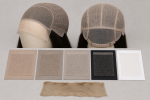
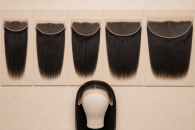
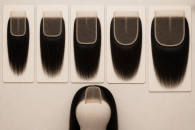
Save the seller's exact use of Swiss lace, the dated model page, disclosed fiber, lace area, color, cap diagram, care instructions, and attachment route. Photograph the dry lace over several matte backings and map mesh openings, thread weight, knots, edges, reinforcement, panel seams, repairs, and stretch direction. Classify every missing specification as unknown rather than filling it with a regional, premium, softness, or invisibility assumption.
Preserve the seller's exact definition
Record whether Swiss identifies a supplier family, mesh style, thread fineness, color, lace zone, cap option, or only a product name. Keep the model and capture date with the evidence because terminology can change across sellers. Do not convert the word into a fixed fiber, denier, opening count, country of manufacture, grade, or performance level without a current specification.
Verify fiber disclosure without destructive testing
Accept nylon, polyester, blend, another named material, or unknown only at the level supported by the maker. Touch, shine, stretch, flame, heat, and solvent behavior are not safe shortcuts to identification. Unknown composition narrows the permitted cleanser, adhesive, remover, tint, and heat route. It does not justify copying limits from another lace product that looks similar.
Inspect mesh geometry at rest
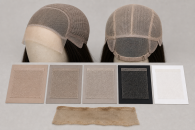
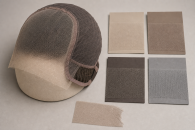
Support clean dry lace over contrasting matte cards without extending it. Observe opening shape, repeat direction, thread intersections, local density, uniformity near the hairline, and transitions around knots. Compare several zones because one fine-looking edge may not represent the crown or seam. Flag broken filaments, connected enlarged openings, snag paths, flattened crossings, or areas that change pattern unexpectedly.
Separate thread fineness from openness
Describe thread width, twist, fuzz, coating, sheen, and consistency separately from opening size. Fine thread can form compact or open mesh, and thicker thread can use another geometry. Do not turn a close photograph into an unsupported denier or strength claim. A delicate appearance also does not establish low friction, lower tension, or a longer usable life.
Compare color and edge contrast under fixed light
Place the same dry panel over light, medium, deep, warm, and cool neutral backings. Record mesh hue, edge shadow, thread sheen, knot contrast, seam color, and reinforcement visibility with fixed exposure. This comparison documents conditions; it does not reproduce every skin surface, cosmetic layer, camera, or environment. Do not promise that Swiss lace melts or disappears.
Map knots and processing evidence
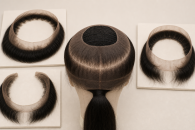
View the knot field from both faces while the cap holds its intended shape. Record spacing, size variation, clustering, color, missing hairs, widening around attachments, and any documented bleaching or tint process. Do not pick, pull, bleach, or recolor knots merely to inspect them. Those actions change the evidence and can damage already fine mesh.
Trace edges, seams, and load paths
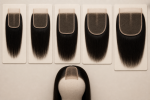
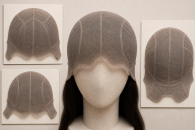
Follow the raw, cut, folded, bound, taped, or reinforced edge into ear tabs, cap panels, monofilament, wefts, elastic, and adjustment hardware. Record seam width, overlap, stiffness, thread, and direction of pull. A front panel can remain intact while a loaded corner or bulky transition causes lifting. Stronger adhesive cannot correct a distorted seam or incorrect cap geometry.
Measure the whole cap before attachment
Use circumference, front-to-nape depth, ear-to-ear arcs, temple route, and nape width from the prepared-hair record. Align the front, crown, ears, and nape with adjusters near neutral and no cosmetic or bond product. Observe ripple, rotation, nape rise, corner pull, seam pressure, and hardware contact during ordinary movement. Stop rather than hiding a fit failure with compression.
Use only the supported product route
Review each cleanser, tint, cosmetic, tape, adhesive, remover, and styling product against the documented lace fiber and every joined component. Keep products off irritated or broken skin and respect placement, drying, contact, and removal directions. A product marketed for lace does not certify compatibility with this cap. More layers or longer contact do not establish a safer or stronger result.
Release and clean without loading fine mesh
Open straps, combs, clips, tape, and adhesive in their documented order, supporting the lace while resistance clears. Use the specified remover and cleanser route without scraping, twisting, rubbing lace against itself, or pulling by the hair. Dry the complete cap in its supported shape, then compare openings, knots, color, seams, edges, and relaxed dimensions with baseline.
Retire structural change rather than masking it
Quarantine the wig for a run, connected enlarged holes, torn corner, frayed edge, pulled knot field, seam separation, permanent wave, failed stretch recovery, unexplained discoloration, hard residue, or cap dimensions that no longer return. Powder, tint, extra hair, stronger bond, and maximum strap tension cannot restore material continuity.
Decision table
| Checkpoint | Continue when | Stop or replace when |
|---|---|---|
| Definition | Seller meaning, model, fiber, lace area, and care limits are preserved | Swiss is treated as a universal grade or origin |
| Mesh | Openings and intersections remain uniform at relaxed cap shape | Run, widening, break, snag path, or permanent narrowing |
| Fit | All landmarks seat with adjustment reserve and no product | Ripple, rotation, nape rise, corner pull, or concentrated pressure |
| Attachment | Only documented products and release steps contact the cap | Unverified solvent, excess bond, scraping, or peeling against resistance |
| Condition | Knots, edge, seams, color, and dimensions remain near baseline | Pulled field, tear, lift, hard residue, discoloration, or distortion |
Use public guidance as a force and product boundary
AAD materials establish a practical reason to stop a setup that repeatedly pulls; they do not define Swiss lace. FDA hair-product information keeps cosmetics within their current directions and does not authenticate mesh. Use the dated seller record, dry material survey, measurements, and fitting observations.
- AAD hairstyle tension reference: End a fitting that depends on repeated cap pull.
- AAD wig and extension precautions: Maintain a clean setup and observable attachment force.
- FDA cosmetic hair-product context: Keep each product within its current labeled use.
Separate lace evidence from hair-format selection
Related extension guides help classify hair and attachment formats. They do not verify a Swiss lace claim, mesh structure, cap geometry, seam condition, or product compatibility.
- extension shopping framework: classifying strand format before applying this separate lace-material inspection
- extension format comparison: distinguishing add-on hair from the cap and mesh evidence reviewed here
- crown extension overview: keeping crown placement questions outside the Swiss terminology decision
Final checklist
- The Swiss term is limited to the seller's documented meaning.
- Fiber, mesh, thread, color, knots, edge, seams, and stretch are inspected separately.
- The complete cap passes a measured product-free fit.
- Attachment, release, cleaning, drying, and storage follow the exact cap route.
- Runs, torn edges, pulled knots, failed seams, residue, or distortion trigger service or retirement.
Keep the Swiss term inside the recorded evidence
No conclusion is made about origin, grade, softness, strength, disappearance, skin-tone correspondence, comfort, airflow, attachment duration, service life, or an injury-free release.
A Swiss lace wig is a terminology, material, mesh, knot, edge, seam, cap-fit, product, removal, care, and condition decision.