Hair Lightener for Dark Hair: Lift and Safety Guide

The best bleach for dark hair is not one universal product. It is a lightener system whose instructions, developer options, lift range, and application method fit your starting color, hair condition, and target shade. Dark hair often needs more than one controlled step to reach a very light result. A strand test gives a more useful preview than a product’s maximum-lift claim.
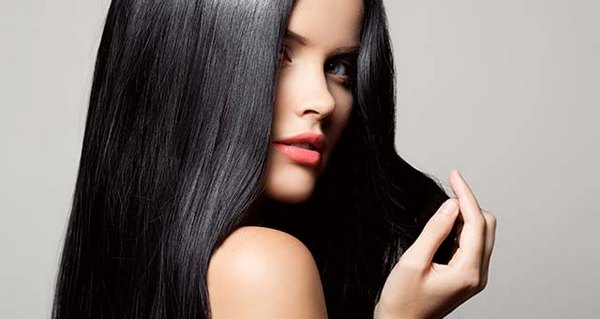
Hair lightener selection for dark hair
Quick Answer: What Should You Look For?
Choose a complete kit if you want the manufacturer to define the components and process. Choose separate powder lightener and developer only when the label clearly explains compatible products and you can follow those directions exactly. Do not choose by the highest advertised lift alone.
| Decision | What to check | Why it matters |
|---|---|---|
| Starting hair | Natural or previously colored; fine, medium, or coarse; current condition | Previous color and damage can change how evenly hair lightens. |
| Target shade | How many visible levels lighter you want to go | A large change can require more processing and creates more damage risk. |
| System | Kit or compatible lightener and developer | Components should be used only as the product directions specify. |
| Application | On-scalp or off-scalp directions | A product intended for one method should not be assumed suitable for another. |
| Test result | Strand condition, lift, warmth, and timing within label limits | This shows what the formula does on your actual hair. |
Kit, Powder Lightener, or Cream Lightener?
Complete lightening kit
A kit is the clearest starting point when its components are pre-selected and the package gives complete directions. Check that every item is present, the packaging is intact, and the instructions cover preparation, timing, rinsing, warnings, and the required skin test.
Powder lightener and separate developer
This format offers more choice, but it also puts more responsibility on the user. Do not improvise the mixing ratio, substitute an unlisted developer, or combine brands unless the manufacturer says they are compatible. Higher developer strength is not automatically a better choice.
Cream lightener
Cream formats can be easier to place and may create less airborne powder during mixing. That does not make them damage-free or suitable for every scalp. The package directions and intended application still control the decision.
For a broader comparison of lightener types, see our hair bleach and safety guide. If you want a visible color change without pre-lightening, start with what hair dye can do on dark hair without bleach.
How Much Lift Is Realistic on Dark Hair?
Maximum-lift numbers are product claims under specified conditions, not a guarantee for every head of hair. Natural depth, previous permanent color, mineral buildup, porosity, strand thickness, and application consistency can all change the result. Dark hair may reveal red, orange, or yellow warmth as pigment is lightened.
The American Academy of Dermatology notes that lightening hair more than three shades generally requires higher peroxide volumes and causes more damage. That is a reason to choose the smallest change that meets your goal, not a formula for increasing developer strength.
| Goal | Planning approach | Avoid assuming |
|---|---|---|
| Subtle brightness | Consider a smaller lift or strategically placed sections | Every strand needs maximum processing. |
| Warm brunette or copper result | Plan for underlying warmth and the final color step | Lightener alone creates the finished shade. |
| Pastel or very light blonde | Get a professional assessment when the change is large | One session will safely reach the target. |
| Previously dyed dark hair | Disclose the full color history and strand-test first | Artificial pigment lifts like natural pigment. |
Strand Test and Label-First Safety Check
- Read the entire package, including warnings, before opening or mixing anything.
- Confirm that the product is intended for the area and method you plan to use.
- Complete the skin test exactly as the manufacturer directs each time it is required.
- Test a small hidden strand using the labeled process and maximum time.
- After rinsing and drying the strand, check the color, elasticity, roughness, and breakage.
- Do not proceed if the test produces a reaction or the strand becomes unusually weak.
The U.S. Food and Drug Administration advises following package directions, wearing gloves, keeping hair-color products away from the eyes, and not leaving them on longer than directed. Never use scalp hair products to color eyebrows or eyelashes. Stop and rinse if the product causes intense burning or another unexpected reaction, and seek medical help when needed.
When a Salon Is the Better Option
Professional help is the more cautious choice when the hair has overlapping permanent color, henna or metallic-salt history, relaxer or perm history, visible breakage, an irritated scalp, or a target many levels lighter than the starting shade. A colorist can assess the hair in person and plan placement and timing; that still does not make a specific result guaranteed.
What to Skip
- Choosing solely by a “nine levels of lift” or similar maximum claim.
- Mixing products or changing ratios outside the label directions.
- Applying to an irritated, scratched, sunburned, or damaged scalp.
- Extending processing time because the strand is not light enough.
- Bleaching eyebrows or eyelashes with a scalp-hair product.
- Assuming “professional” on a label means beginner-proof or damage-free.
If your target is a pale fashion shade, our light blue hair dye guide explains why the starting base matters. For upkeep after any color change, see how formula, washing, and care affect color duration.
Sources
- U.S. Food and Drug Administration: Hair Dyes
- U.S. Food and Drug Administration: Hair Dye and Hair Relaxers
- American Academy of Dermatology: Coloring and Perming Tips for Healthier-Looking Hair
Common Questions
Can dark hair reach blonde in one bleaching session?
Sometimes a visible lift happens in one session, but a very light target is not guaranteed. Starting color, previous dye, hair condition, and the labeled system all affect the result. Avoid repeating or extending processing simply to force a target shade.
Is a stronger developer always better for dark hair?
No. Stronger is not automatically more suitable, and greater lightening can cause more damage. Use only a developer strength and ratio allowed by the lightener instructions, or ask a qualified colorist to assess the hair.
Should you bleach hair that is already breaking?
Do not treat a strand test as permission to ignore visible damage. If hair is breaking, unusually elastic when wet, or the scalp is irritated, postpone chemical lightening and seek professional advice.