Best Flat Iron for Fine Hair: Low Heat, Plates, and Passes

The best flat iron for fine hair is usually a lightweight tool with adjustable low or medium heat, smooth narrow plates, and enough control to smooth small sections without pressing out all the volume. Use this guide to choose features, set a conservative routine, compare plate materials, and avoid turning a styling-tool choice into a damage-proof promise.
Quick Answer: What Flat Iron Works for Fine Hair?
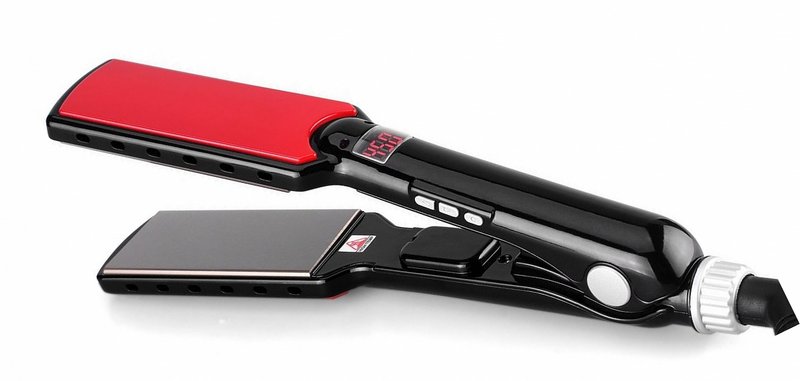
Choose a flat iron with clear low or medium heat settings, smooth plates, light pressure, and a plate width that matches small sections. Fine hair usually needs control more than maximum heat. A tool that lets you start low, make one careful pass, and keep the hair from looking flattened is usually a better fit than a hot one-setting iron.
| Fine-hair need | Feature to check | Why it matters | Conservative use note |
|---|---|---|---|
| Low density or thin-looking hair | Adjustable heat with low/medium settings | Lets you style without jumping straight to high heat | Start low on a small hidden section |
| Flat roots | Narrow to 1 inch plates | Gives more control near shorter layers and roots | Lift the section before the pass instead of clamping down |
| Flyaways | Smooth plate surface | Reduces snagging while the tool moves | Replace tools with chipped or sticky plates |
| Volume loss | Rounded edges and light tool weight | Helps bend ends softly instead of pressing everything flat | Finish the ends with a slight curve |
| Fast morning routine | Auto shutoff and quick temperature display | Makes repeatable low-heat styling easier | Do not use speed as a reason for repeated passes |
Fine Hair vs Natural Hair and General Straightener Pages
This page is for fine, low-density, or easily weighed-down hair. The main decisions are heat control, light product layers, small sections, and volume. If your main need is textured-hair prep, stretching, and natural-hair sectioning, use the flat iron for natural hair guide instead.
| Intent | Use this fine-hair page when | Use another page when |
|---|---|---|
| Hair density | Your hair looks flat easily or has a small ponytail circumference | Your main issue is dense, curly, coily, or textured hair prep |
| Heat decision | You need lower settings and fewer passes | You need a textured-hair stretch routine before ironing |
| Finish goal | You want smoothness while keeping movement | You want a broader blowout or hair-dryer routine |
| Product pairing | You need lightweight heat protectant and minimal residue | You need curl hold, mousse, gel, or diffuser styling |
Feature Checklist for Fine Hair
AAD hair-care guidance points to low or medium heat settings, dry hair before flat ironing, and limiting frequent hot-tool exposure. That makes the temperature dial and routine more important than dramatic product claims.
| Feature | Look for | Be careful with | Best fit |
|---|---|---|---|
| Temperature control | Visible settings, not only on/off | One-setting tools that run very hot | Fine hair, bangs, face-framing pieces |
| Plate width | 0.75 to 1 inch for most fine-hair routines | Very wide plates on short layers | Control near roots and ends |
| Plate condition | Smooth, clean, even plates | Chipped, sticky, or scratched surfaces | Reducing drag during a pass |
| Weight and hinge | Light tool, even pressure | Heavy clamp pressure | Keeping volume and avoiding dents |
| Outer edge | Rounded edge shape | Sharp corners that leave bends | Soft bends and polished ends |
| Auto shutoff | Timer or shutoff feature | Leaving a hot tool unattended | Daily home routines |
Ceramic, Titanium, and Tourmaline for Fine Hair
Plate material can matter, but it should not override heat control. Fine hair often does better with a smooth plate and adjustable temperature than with a material chosen from marketing copy alone.
| Plate wording | Useful signal | Fine-hair caution | Shopping note |
|---|---|---|---|
| Ceramic | Often chosen for smoother, steady styling | Coatings can wear over time | Check plate smoothness and temperature settings |
| Titanium | Can heat quickly and strongly | May be more heat than fine hair needs | Only consider if settings are clear and controllable |
| Tourmaline | Common on smoothing-focused tools | Does not replace careful sectioning | Judge by glide and low setting control |
| Floating plates | Can make pressure more even | Uneven pressure can crease fine hair | Test whether the plates close smoothly |
| Rounded body | Helps bend ends or create soft waves | Still needs light pressure | Useful if you do more than straight looks |
Heat Setting, Section Size, and Pass Count
Fine hair usually shows heat and pressure quickly. Start with dry hair, choose a low or medium setting, and test a small section before raising the temperature. AAD guidance says flat irons should be used on dry hair and not used too often.
| Hair situation | Section size | Heat direction | Pass-count note |
|---|---|---|---|
| Very fine, low-density hair | Small but not paper-thin sections | Start at the low end of your tool | One smooth pass after testing |
| Fine hair with bend at the ends | Small sections near ends | Low to medium if needed | Curve the tool instead of repeating |
| Fine but thick-looking hair | Medium-small sections | Increase only after a test section | Better sectioning before more heat |
| Bangs or face frame | Tiny sections | Low setting and light pressure | Move quickly and keep the tool off skin |
| Second-day refresh | Only the pieces that need it | Lower than full wash-day styling | Use fewer sections rather than restyling everything |
Lightweight Prep and Heat Protectant
Use products that are labeled for heat styling, then let the hair dry fully before the plates touch it. AAD notes that some leave-in conditioners list heat-tool protection on the package. For fine hair, the amount matters: too much cream, oil, or spray can make the style fall flat.
| Product type | Role | Good sign | Watch out |
|---|---|---|---|
| Heat protectant spray | Preps hair for hot tools | Label mentions heat styling tools | Wet sections right before ironing |
| Light leave-in | Softness and manageability | Fine-hair or lightweight wording | Heavy cream at the roots |
| Volumizing mousse | Root lift before drying | Used before blow-drying as directed | Sticky residue on plates |
| Serum | Small amount on ends | One drop or light mist after styling | Oil-heavy layers before the hot tool |
| Hairspray | Final hold | Light finish after sections cool | Spraying heavily before passing the iron |
Step-by-Step Routine
- Wash and condition on your normal schedule.
- Detangle gently before drying.
- Apply a small amount of heat protectant if the label says it is made for hot tools.
- Dry the hair completely before flat ironing.
- Clip hair into small, easy sections.
- Start with the low setting on a hidden section.
- Use light pressure and one controlled pass.
- Let each section cool before brushing through.
- Touch up only the pieces that need more polish.
When to Choose a Different Tool
A flat iron is not always the better tool for fine hair. If your main goal is lift, shape, or curl hold, a blow dryer, round brush, roller, mousse, or air-dry routine may keep more movement.
| Goal | Better option | Why |
|---|---|---|
| More root lift | Blow dryer and round brush | Airflow can build shape before the hair is pressed flat |
| Soft wave | Rounded flat iron edge or large barrel iron | Gives bend without pressing the whole strand flat |
| Second-day volume | Dry shampoo or root mist | May refresh roots without another full heat pass |
| Curl hold | Hair mousse guide | Mousse can support shape before drying |
| Textured-hair straight style | Natural-hair flat iron guide | Prep and sectioning are different from fine-hair volume needs |
Chemical Smoothing Boundary
This guide covers home flat iron shopping and routine decisions. It is not a guide to chemical smoothing services or heated smoothing products. FDA has separate information for hair smoothing products that can release formaldehyde when heated, so keep those service decisions separate from buying a normal flat iron.
Common Mistakes
- Choosing a tool because it gets very hot instead of because it can run lower.
- Flat ironing hair that is still damp.
- Using a large section, then repeating passes to compensate.
- Pressing hard at the roots and losing all volume.
- Adding heavy oil or cream before the plates pass over the hair.
- Using the hot tool as a daily fix for every bend or flyaway.
- Assuming plate material matters more than smooth plates, clean buildup, and heat control.
Sources
- AAD: Hair styling without damage
- AAD: Hair care habits that can damage your hair
- AAD: Tips for healthy hair
- AAD: How to stop damaging your hair
- FDA: Hair products
- FDA: Hair smoothing products that release formaldehyde when heated
FAQ
What type of flat iron is best for fine hair?
A flat iron with adjustable low or medium heat settings, smooth narrow plates, light pressure, and an auto shutoff is usually the better starting point for fine hair.
Should fine hair use ceramic or titanium plates?
Either can work if the tool has clear heat control and the plates glide smoothly. Titanium can heat strongly, so fine-hair shoppers should pay close attention to the lowest usable settings.
What plate width works for fine hair?
A 0.75 to 1 inch plate is versatile for fine hair because it gives control near roots, bangs, short layers, and ends. Very wide plates can press fine hair too flat.
Can I flat iron fine hair every day?
Use hot tools less often when you can. AAD guidance recommends limiting flat-iron use and using low or medium settings, so daily full-head passes are not the conservative routine.
Should fine hair be flat ironed wet or dry?
Flat iron fine hair only when it is dry. Damp sections can style unevenly and lead to more repeated passes.
How do I keep fine hair from looking flat after straightening?
Use smaller sections, light pressure, a narrow plate, minimal product, and a slight bend at the ends. Let sections cool before brushing through.
Does heat protectant mean I can use high heat?
No. Heat protectant can support a hot-tool routine when the label says it is made for that use, but low settings, dry hair, and fewer passes still matter.
When is a hair dryer better than a flat iron for fine hair?
A hair dryer or round brush is often better when your main goal is root lift, movement, or volume. A flat iron is better when you need targeted smoothing.