Cream Permanent Hair Color: Formula, Directions, and Compatibility Guide

Direct answer: choose cream permanent hair color only after confirming its intended use, exact compatible developer, mixing ratio, shade system, gray-coverage or lift directions, timing, and tool restrictions. Its thicker texture can support controlled brush application, but it does not guarantee even coverage or suitability. Run all directed preliminary tests, perform a representative strand test, and stop if the formula, hair condition, or scalp response falls outside the label.
Cream describes application texture, not one universal chemistry. Two cream colors may differ in alkalinity, dye system, developer requirement, lift, deposit, gray coverage, and permitted techniques.
Identify the exact formula class
Confirm that the product is permanent oxidative color rather than demi-permanent cream, direct dye, lightener, high-lift tint, color remover, or conditioner pigment. Read the full product identity and technical directions.
The demi-permanent hair color guide explains how deposit-focused systems differ in activation, longevity, and lift expectations. Texture alone cannot distinguish them.
Match only the supported developer
Use the developer line, strength, and ratio the manufacturer specifies for the shade and service. Do not substitute a stronger developer to chase lift, a weaker one to reduce risk, or another brand because the bottle percentage looks similar.
Record whether the ratio is by weight or volume. Use clean, dry, compatible measuring tools and do not estimate by eye.
Understand what cream texture changes
Cream color often stays where a brush places it and can make section-by-section saturation easier to see. It can also sit thickly on the surface of an oversized section, creating the appearance of coverage without penetrating the interior hair.
Adjust section size and brush load to the actual density. Do not dilute the mixture or add conditioner to make spreading easier unless the formula explicitly permits it.
Inspect the starting canvas
Map natural level, artificial pigment, gray concentration, resistant hairline zones, porous ends, bands, previous lightening, texture, density, elasticity, and breakage. Roots, mids, and ends may require different formulas or may not be suitable for one-step color.
A permanent cream color cannot reliably erase unknown chemical history. Corrective work and major lift may require a qualified colorist.
Complete skin and strand tests separately
Follow the exact preliminary skin-test method and timing for the current product. A clear result does not guarantee a reaction-free full service. Keep the product away from irritated skin, eyes, eyebrows, and eyelashes.
Use a representative strand test for color, timing, coverage, evenness, and hair condition. Dry the test fully before judging level and undertone.
Build a zone-specific formula plan
Write the product, shade, developer, ratio, quantity, application order, and timing for roots, hairline, mids, ends, and any resistant or porous zone. Do not overlap permanent color repeatedly onto fragile lengths without a supported reason.
The demi-permanent formula guide provides a comparison for situations where a deposit-focused refresh may fit better than repeating permanent color through the lengths.
Use compatible tools and a controlled station
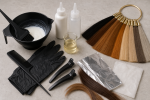
Follow any restriction on metal bowls, clips, whisks, or combs. Prepare gloves, a stable bowl, tint brush, clips, timer, section map, surface protection, designated towels, and directed cleanup materials before mixing.
Key materials and decision points for cream permanent hair color include a clearly identified cream mixture, compatible brush and bowl, protective gloves, representative swatches, and separate component containers. These items support ratio, texture, saturation, and compatibility checks; they do not identify a brand or promise a result.
Mix for uniform texture
Combine components in the stated order and ratio until the consistency matches the directions. Scrape the permitted bowl surface so unmixed pockets do not remain. Start application within the supported use window.
Do not save activated leftovers, return mixture to the original container, or remix old and fresh batches. Stop for unexpected heat, foaming, odor, separation, or tool damage.
Apply in thin, complete sections
Use enough product to coat the target hair fully without flooding the scalp or skin. Work systematically and check the underside of each section. Around the hairline, use precise brush loading and avoid coating skin.
Dense or resistant zones may need smaller sections, not excessive processing time. Porous ends may need a different formula or shorter exposure only when supported by the plan.
Control timing
Follow the manufacturer’s definition of processing start and maximum time. Record each zone’s application and processing times. Do not add heat, extend timing, or repeatedly reopen sections unless the directions permit it.
Use strand-test evidence to choose within the allowed range, never beyond it.
Rinse and assess fully dry hair
Follow the exact rinse, shampoo, neutralizing, and conditioning steps. Rinse dense sections completely and protect eyes and skin. Dry hair before judging level, undertone, gray coverage, and banding.
The red hair color ideas guide shows how shade, placement, starting canvas, and maintenance affect a finished color decision beyond formula texture.
Compatibility stop conditions
- The developer, ratio, shade system, or directions cannot be confirmed.
- The scalp is irritated or a preliminary test produces a reaction.
- The strand test shows unacceptable breakage, elasticity loss, banding, or uneven uptake.
- The product conflicts with previous henna, metallic salts, relaxer, perm, lightener, or unknown chemistry.
- The mixture behaves unexpectedly or tools violate the label.
- The target requires lift or correction beyond the formula’s stated use.
Cream permanent color checklist
- Confirm permanent oxidative formula, intended use, and shade system.
- Match the exact supported developer and ratio.
- Map roots, gray, bands, porous lengths, and damaged zones.
- Complete directed skin and representative strand tests.
- Use compatible tools, thin sections, and complete saturation.
- Track application and processing by zone.
- Do not add heat, dilute, overlap, or extend timing without support.
- Rinse as directed and assess fully dry hair.
- Stop when identity, compatibility, condition, or reaction boundaries fail.
Authoritative boundaries
The U.S. Food and Drug Administration hair-dye guidance emphasizes package directions, gloves, directed preliminary tests, rinsing, irritated-skin limits, and eye-area restrictions. The American Academy of Dermatology coloring guidance supports manufacturer-directed testing, conservative changes, and caution with chemical services.
Neither source prescribes a cream formula or guarantees coverage, lift, shade, or suitability. Cream permanent color is a controlled system: identity, developer, ratio, canvas, saturation, timing, and condition must all agree before the full application proceeds.