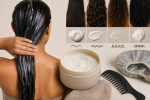
Detangling Sprays: Slip, Spray Pattern, and Comb-Through Method

Direct answer: use detangling spray to add temporary slip under the exact wet-or-dry directions, not to force a comb through a knot. Test the spray pattern away from the face, divide hair into supported sections, apply the minimum amount to permitted zones, allow the stated distribution time, and detangle from ends upward with fingers or a suitable wide-tooth tool. Stop when resistance, pain, matting, snapping, residue, or scalp discomfort increases.
Identify the spray format
Detanglers may be water-light sprays, milky leave-ins, oil sprays, dual-phase liquids, child-focused products, extension products, or heat-protecting stylers. Read whether to shake, where to spray, whether hair must be wet or dry, and whether rinsing is required. The FDA hair-products overview supplies cosmetics context without proving effortless detangling.
Read slip ingredients in formula context
Conditioning agents, polymers, silicones, oils, and humectant systems can influence surface slip and residue, but an ingredient name does not predict the exact force needed on every knot. Fragrance, preservatives, and suspended materials also matter. Judge the finished formula and the stated use rather than selecting from one ingredient list shortcut.
Confirm wet versus dry directions
A spray designed for damp hair may distribute unevenly or feel sticky on dry hair, while a dry-use product may become over-diluted on soaking hair. Follow the specified water level and remove excess water with low friction. Do not mist dry hair merely because wet detangling feels slow, or saturate wet hair until product drips.
Test the spray pattern safely
Aim into a sink, towel, or other permitted surface away from faces and people to confirm mist, stream, sputter, and nozzle direction. Keep eyes, mouth, airways, broken skin, and slippery floors out of the spray path. Do not clear a blocked nozzle with a pin or spray toward the face to see whether it works.
Map sections before product
Separate hair into manageable zones with fingers or clean clips, then identify ends, knots, dense underside, and root areas. Long or dense hair may need more sections rather than more spray per section. The long-hair guide supports low-tension section planning.
Apply the minimum useful amount
Hold the bottle at the stated distance and use controlled sprays on the permitted zones. Shield nearby skin or surfaces when directed. Smooth product with palms only when allowed, then wait the stated interval before combing. More liquid can create dripping, root heaviness, fragrance load, tool residue, and difficult washout without releasing the knot.
Start with fingers and supported ends
Support the section above the working point to limit pulling at the scalp. Separate obvious crossed fibers with fingers, then begin at the ends and progress upward in short passes. Do not rake from roots through a knot, twist the section tighter, or use pain as evidence that the product needs more time.
Choose a compatible comb or brush
Wide-tooth comb spacing, flexible brush rows, handle grip, seam quality, and clean edges affect control. The curly-hair brush guide compares detangling and styling functions. Replace a cracked, sharp, dirty, or snagging tool instead of compensating with more spray.
Use resistance as a stop signal
When the tool stops, withdraw it and inspect the knot rather than pulling harder. Add water or product only if the directions and current section condition support it. Matted areas, adhesive, thread, gum, severe compacting, or an unknown contaminant may need a different method or qualified help, not repeated comb force.
Keep temporary color sprays separate
Color sprays and detanglers can use similar bottles but have different pigments, transfer, and washout. The black hair-spray guide separates temporary color from slip. Do not use a color spray to release knots or assume a detangler protects clothing from color transfer.
Inspect residue after drying
Check roots, underside, lengths, ends, comb teeth, brush rows, towels, and pillowcases for film. Observe section separation, softness, tack, stiffness, fragrance, and rapid return of tangles. A slippery wet section can dry coated. Reduce dose or frequency before adding a stronger wash or another leave-in layer.
Clean the nozzle and tools
Wipe the exterior nozzle under product directions, close the bottle, and keep it upright when required. Remove hair and residue from combs, brushes, clips, and towels, then dry them fully. Do not refill the bottle, dilute it, or combine leftovers. Replace leaking, separated, malodorous, expired, or unidentifiable product.
Review ingredient and breakage boundaries
The FDA cosmetics-allergen guidance supports ingredient review without predicting response. The AAD hair-care guidance supports gentle handling without prescribing detangler. Stop for burning, swelling, hives, sores, marked shedding, pain, or worsening breakage and follow appropriate guidance.
Decision table
| Question | Useful evidence | Stop or revise when |
|---|---|---|
| Wet or dry? | The exact product direction and water level | The method is chosen from habit |
| Is the spray controlled? | Pattern, distance, zones, and nearby surfaces are known | Mist reaches face, airways, or floor |
| Can the knot move? | Supported end-first passes meet decreasing resistance | Pain, matting, or snapping increases |
| Is residue acceptable? | Dry sections separate without unwanted film | Tack, stiffness, or repeated layering appears |
Final checklist
- Formula, shaking, wet-or-dry condition, zones, and rinse status are known.
- Spray pattern is checked away from faces and slippery surfaces.
- Hair is sectioned, supported, and released from ends upward.
- Comb or brush edges are clean, smooth, and compatible.
- Pain, matting, reaction, and worsening breakage stop the session.
Detangling spray is a temporary slip aid, not permission to increase force. Control the mist, support small sections, work from ends upward, and let resistance, residue, and breakage determine when to stop or change methods.