Foam Mannequin Heads: Selection, Use, Cleaning, and Replacement

Direct answer: Choose a foam mannequin head by checking its overall height, head circumference, face and crown profile, expanded-foam density, neck, and base stability against a lightweight display or storage task. Center the wig without stretching the cap and keep the unit on a broad level surface. Foam heads are not automatically pinnable, heat resistant, solvent resistant, washable, or suitable for heavy construction work. Replace one that sheds, dents, leans, cracks, absorbs residue, or loses its base.
Document the foam form and its balance
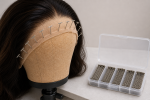
Photograph the face profile, crown, ears, neck, underside, bead texture, and any existing dents before placing a wig. Measure the base footprint and head dimensions, then note whether the empty form returns upright after a light touch from each direction.
Define a lightweight support task
Decide whether the head will hold a clean dry wig for short display, shelf storage, photography, or another expressly permitted low-load use. Do not begin with intensive detangling, cutting, coloring, adhesive work, steaming, or construction. A low-cost lightweight form can still be useful when its narrow task, surface, and stability limits are respected.
Compare size without forcing the cap
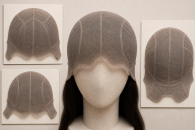
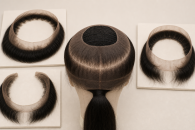
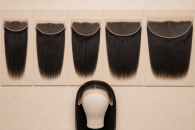
Measure head circumference at the stated line, crown height, front-to-nape distance, face projection, neck length, and base footprint. Compare with the wig cap off the wearer. A stylized face and long neck can change drape without matching a person's anatomy. If elastic, lace, or seams strain, choose another support rather than stretching harder.
Inspect expanded-foam texture and density
Look across the bead-like surface under side light. Note compressed areas, pits, voids, fused seams, rough ridges, loose beads, dents, yellowing, cracks, previous punctures, and odor. Press only as the directions allow. A smooth painted surface may conceal damage, while a coarse visible bead pattern does not by itself establish weakness or chemical resistance.
Stabilize the base before dressing it
Place the empty head on a clean level surface and observe the full base contact. Apply a light touch at the crown and from four directions. It should not tip, slide, rotate unexpectedly, or reveal a warped underside. Use only a compatible approved stand when a mounting hole exists. Do not tape the form to furniture or load the base with hidden weights.
Lower the wig rather than pulling it
Support the wig cap with both hands, align front and back landmarks, and lower it over the crown. Ease the cap into position without scraping lace over rough foam or using hair fibers as handles. Arrange the fiber evenly around the head so one side does not tip the form. Remove combs or clips from contact with foam unless their use is explicitly permitted.
Keep force and tools away from uncertain foam
Do not assume the head accepts T-pins, needles, clamps, razors, adhesives, solvents, dyes, or hot tools. A point can create a hidden channel, break foam, or remain embedded. Strong brushing can tip the form or tear a cap. Move any task requiring load, heat, sharp tools, or chemical compatibility to purpose-built equipment with documented limits.
Use a stable grooming boundary
For light permitted arrangement, support the hair above the working point and use short low-force passes from the ends. Keep one hand at the base rather than gripping the face or neck. Stop if the head skids, leans, dents, sheds, or the wig cap shifts. Do not continue simply to make the display look more polished.
Clean with minimal material exposure
Remove loose hair using a soft dry cloth or other stated method. Spot clean only if the foam directions identify compatible moisture and cleaner limits. Avoid soaking, spraying, scrubbing, bleach, alcohol, acetone, oils, and fragrance unless expressly allowed. Test no improvised chemistry on a form that will later contact a wig.
Dry and store without compression
After permitted cleaning, remove the wig and allow the head to dry fully in open air away from heat and direct sun unless directed otherwise. Store upright with space around the face, ears, crown, neck, and base. Do not stack heavy objects on it, compress it in a tight bag, or let another stand create a permanent dent.
Replace visible or hidden-use failures
Retire it for persistent odor or residue, dampness, crumbling beads, deep dents, cracks, widening punctures, detached ears or facial areas, neck fracture, warped or missing base, leaning under a compatible wig, unstable mounting, or a surface that snags the cap. Cosmetic paint cannot restore structure, cleanliness, or predictable support.
Decision table
| Checkpoint | Continue when | Stop or replace when |
|---|---|---|
| Task | Clean dry lightweight display or storage | Heavy construction, heat, chemicals, or sharp tools |
| Surface | Foam is intact and free of loose beads | Crumbling, cracks, deep dents, or rough snags |
| Base | Full contact remains level and stable | Sliding, rocking, leaning, or a warped underside |
| Cap fit | Wig lowers into place without strain | Elastic, lace, or seams must be forced |
| Storage | Head stays dry and uncompressed | Odor, residue, dampness, or permanent deformation |
Use wear guidance only after the display task
AAD sources address tension on a person's hair and scalp, not the strength of expanded foam. They can inform the later wear check but cannot certify this support. FDA information does not establish that a foam form tolerates a cosmetic, cleaner, adhesive, or solvent.
- AAD information about hairstyle traction: Use it during later wear review, never as a foam-strength reference.
- AAD extension-care precautions: Keep clean gentle handling as a hair-system boundary beyond display.
- FDA cosmetic hair-product overview: Do not assume a cleaner or styling product is compatible with expanded foam.
Move beyond display only when the hair question is clear
The linked extension resources address hair formats and upkeep. Consult them when selecting the hairpiece; retain this page for the separate question of lightweight foam support and storage.
- hair crown extension guide: addresses shade and placement beyond the display form
- extension format guide: separates hair construction from foam support
- extension selection guide: returns attachment questions to the hairpiece itself
Final checklist
- The intended use is a compatible lightweight support task.
- Head dimensions and profile accept the wig without cap strain.
- Foam texture, neck, and base are intact, clean, dry, and stable.
- Sharp tools, heat, strong chemicals, and heavy work remain outside the setup.
- The head is stored upright without pressure that can create a permanent dent.
Do not turn display balance into a wear promise
A stable foam form demonstrates only that a compatible dry wig can rest on that form in the recorded setting. It does not establish human fit, fiber protection, heat or solvent resistance, or suitability for sharp tools. Keep display evidence within its narrow task.
A foam mannequin head is useful when its job stays light and observable. Size, surface integrity, balance, cap fit, cleaning limits, and storage decide whether it remains a dependable support.