Canvas Block Heads: Selection, Use, Cleaning, and Replacement

Direct answer: Choose a canvas block head by matching its stated circumference and front-to-nape profile to the wig cap, then inspect the cork or disclosed core, canvas weave, panel seams, base, mounting hole, and permitted pin zones. Mount it on a stable compatible clamp before placing a wig. Use circumference markings as equipment dimensions, not proof of a person's fit, and retire a block that rocks, sheds, stays damp, develops soft spots, or no longer holds approved pins predictably.
Map block geometry and structural landmarks
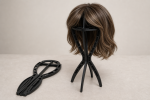
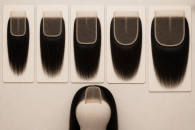
Photograph the canvas panels, crown join, profile, lower binding, base, and mounting interface before adding a cap. Record the stated measurement line and mount type. Mark only approved pin zones in the work record, not on the canvas, so new soft spots or seam movement remain visible.
Start with circumference and profile
Record the manufacturer's circumference method, crown height, forehead slope, occipital projection, ear-area shape, neck length, and base diameter. Compare those dimensions with the wig cap while it is off a person. Two blocks with the same nominal circumference may distribute volume differently. Do not force a small cap over a larger block simply to create stretch.
Identify the core and canvas system
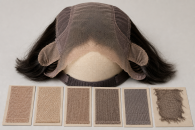
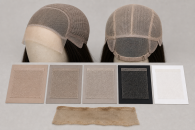
Confirm whether the interior is cork, composite, foam, wood-filled, or another disclosed material. Inspect the canvas weight, weave, panel count, seam placement, top join, lower binding, and attachment to the base. Canvas color and firmness alone cannot verify the core. Look for shedding, hollow sounds, soft areas, wrinkles, frayed seams, and exposed substrate.
Verify the mounting interface
Match the base hole or fitting to the intended table clamp, floor stand, tripod, or other approved mount. Seat it to the stated depth and tighten only by the mount directions. Test the empty block for rotation, tilt, lift, and clamp movement. Never wedge an incompatible fitting with paper, fabric, tape, or improvised hardware.
Protect the table and the working zone
Clamp only to a stable surface with enough edge depth and load capacity. Keep the block away from walkways, shelf edges, children, pets, electrical cords, and liquids. Establish a counted tool zone and closed pin container before work begins. The block should not become a general storage cushion for unidentified sharp items.
Place the cap without changing its size
Support the clean dry wig cap and lower it over the block, aligning the center front, crown, ear tabs, and nape to the relevant profile. Smooth without stretching lace or elastic beyond the wig directions. If the cap cannot reach its landmarks, reassess block dimensions rather than pulling harder or using extra pins to force alignment.
Use pins only in approved material and zones
Choose the pin type, length, and insertion depth allowed for the block and task. Insert at a controlled angle with points fully inside the core and heads visible. Keep pins away from hands, face areas, hard base hardware, and uncertain voids. Count pins in and out. Never use the mounted block as a proxy for placing pins on a person.
Keep construction force within the mount
Support the work close to the contact point during light sewing, ventilating, or other permitted construction. Recheck block rotation and clamp security after directional force. Stop if the core compresses, a pin loosens, canvas pulls, seams open, or the mount shifts. More clamp torque cannot repair a damaged table, fitting, or block base.
Limit heat, steam, chemicals, and moisture
Do not infer resistance from a firm canvas surface. Follow separate directions for the block, wig fiber, lace, adhesive, color product, cleaner, and tool. Shield or relocate the block when one material limit is uncertain. Avoid soaking. If minor permitted moisture reaches the cover, remove the wig and dry the entire block with unrestricted airflow before storage.
Clean the canvas by its stated method
Remove loose hair and thread with a soft dry method. Spot clean only when the directions identify a compatible process, using minimal moisture and no aggressive rubbing. Do not bleach, saturate, scrape, or mask stains with paint or makeup. Inspect seams and the underside during drying because the surface can feel dry before the core is.
Replace structural, hygienic, or holding failures
Retire the block for persistent dampness or odor, visible growth, staining linked to residue, torn or detached canvas, opening seams, exposed core, shedding, soft or hollow zones, distorted profile, loose base, cracked mounting interface, uncontrolled rotation, or pins that no longer hold at the permitted depth. Do not transfer a compromised block to skin-contact display use.
Decision table
| Checkpoint | Continue when | Stop or replace when |
|---|---|---|
| Geometry | Circumference and profile match the cap task | Cap requires force or landmarks distort |
| Cover | Canvas is taut, intact, and dry | Tears, open seams, residue, odor, or dampness |
| Mount | Block stays level under light directional load | Rotation, tilt, lift, or clamp movement |
| Pin zone | Approved pins hold at controlled depth | Loose pins, voids, hard stops, or shedding |
| Structure | Core remains firm and profile consistent | Soft spots, distortion, or exposed substrate |
Keep block dimensions outside personal fit claims
AAD traction guidance supports avoiding a final wear setup that depends on painful pulling; it does not validate a block size or pinning method. FDA hair-product information can frame cosmetic contact, but it does not certify canvas, cork, clamps, heat exposure, or construction equipment.
- AAD weave and extension precautions: Use gentle final wear practices after every construction pin has been removed.
- FDA hair-products information: Keep each cosmetic within its own directions instead of assuming the canvas tolerates it.
- AAD hairstyle traction guidance: A block dimension cannot justify painful tension during a later fitting.
Connect the completed unit to the right hair guide
After equipment checks, the related extension pages can help separate fiber, attachment, shade, and placement choices. Those reader tasks should not be inferred from the block's dimensions or firmness.
- extension shopping framework: moves fiber and attachment selection beyond the block
- hair crown extension planning: handles shade and placement as later decisions
- extension types overview: keeps construction support distinct from the chosen hair format
Final checklist
- Circumference, profile, core, canvas panels, seams, and base are documented.
- The compatible mount holds the empty block level without improvised shims.
- The wig cap reaches its landmarks without force or distortion.
- Approved pins are counted and used only where the core holds predictably.
- The block is fully dry and structurally intact before storage or reuse.
Keep equipment evidence tied to the block
Circumference, pin holding, mount stability, and canvas condition are equipment observations. They do not prove a person's fit, a damage-free installation, heat resistance, or professional construction quality. Every final fitting requires its own pin-free wear assessment.
A canvas block head is controlled equipment: geometry, cover, core, mount, pin behavior, moisture, and storage all matter. Replace it when any of those properties can no longer be inspected or reproduced.