Lace Tint Mousse: Selection, Use, Cleaning, and Replacement

Direct answer: Choose lace tint mousse only after its shade family, formula, warnings, foaming dispenser, compatible lace, drying instructions, and washout route match the actual off-head material. Dispense the stated amount onto a clean palette or permitted applicator, observe whether the foam is uniform, and place a thin controlled layer on a representative lace swatch. Judge color only after complete drying on light and dark backings. Keep mousse away from eyes, skin, hair, adhesive, and hardware unless the directions allow contact. Retire stock that leaks, separates, produces watery or irregular foam, clogs, expires, or leaves residue that cannot be removed by the stated method.
Record foam behavior beside an untreated lace reference
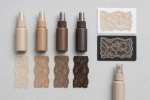
Keep the product identity, ingredients, warnings, shade, compatible lace, pump position, dose, foam density, collapse interval, application surface, drying directions, washout method, storage, lot, and expiration together. Photograph a dry untreated swatch and each fully dried test swatch over light and dark backings; do not use bottle color or wet foam as the reference.
Distinguish mousse from tint spray
Mousse is delivered as expanding foam through a foaming pump and is placed rather than projected as airborne droplets. Record foam density, bubble size, collapse, and spread. Spray distance, nozzle pattern, drift, and pass count belong to a spray decision and cannot be transferred to this format. A liquid that exits without stable foam may indicate an unprimed, damaged, incompatible, or altered dispenser; follow the product correction route instead of improvising.
Compare undertone with dry lace, not the bottle
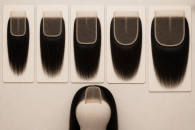
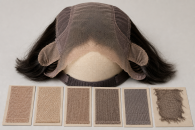
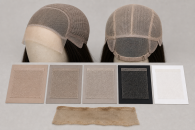
Place the untreated lace over white, black, and neutral backings under consistent indoor light and indirect daylight. Compare disclosed shade families for depth, warmth, coolness, and transparency. The colored liquid visible through a bottle can differ from aerated foam and the dried deposit. Do not mix shades in an unidentified container, add pigment, or assume that a cosmetic complexion name predicts the appearance of a particular mesh.
Inspect the foaming pump as a dosing system
Check the cap, pump head, spring return, collar, threads, body, dip tube when visible, and exterior residue. Prime only by the current directions onto a protected surface. A complete stroke should produce the expected portion without sputter, leakage at the collar, sticking, or uncontrolled runny liquid. Do not pierce the outlet, remove an internal screen, transplant a pump, or thin the formula to make a failed dispenser work.
Build a controlled off-head swatch
Use spare lace from the same fiber, color, finish, and construction when available. Keep an untreated sample beside it. Place the sample flat on a clean protected support, free of adhesive, tape, cosmetics, hair, and skin. If only a hidden test zone is allowed, document that limitation. Do not test on installed lace, near eyes, or on an area whose knots, seams, or previous tint make the result impossible to interpret.
Manage foam collapse before placement
Follow the instructions for shaking, pump orientation, dose, and applicator. Some foam is intended to be spread promptly; another formula may require a stated brief settling interval. Observe the product rather than inventing a wait time. Work with one measured portion so the beginning and end of the swatch receive comparable material. Do not keep adding foam to compensate for a wrong shade or a patch that is still wet.
Keep the layer thin enough to inspect mesh
Place mousse with the named tool and motion while the lace remains relaxed. Work from a clean boundary into the test area, preventing buildup at cut edges, seams, folded mesh, or knots. Openings should remain visible unless the product directions describe another endpoint. Pooling, crust, streaks, and opaque ridges are stop signs. Do not rub aggressively or stretch wet lace to distribute color.
Let the sample dry before deciding
Use the stated ventilation, orientation, temperature, and drying interval without unlisted heat, direct sun, or high-pressure air. Examine both faces after drying for even shade, residue, stiffness, transfer, rings, blocked openings, and knot buildup. Recheck over all reference backings. A wet swatch may look darker or smoother than the finished material, so it cannot support a shade decision.
Confirm washout without promising reversibility
Clean the accepted test by the compatible cleanser, water temperature, agitation, rinse, and support method. Record color release, remaining stain, residue, flexibility, mesh shape, and knot condition after complete drying. One acceptable wash does not establish permanent color or unlimited reversibility. Do not scrub a stubborn area, add solvent, or repeat washing beyond the directions merely to force the lace back to its starting shade.
Apply only after the material test remains acceptable
Protect fiber, cap panels, elastic, combs, and work surfaces. Reproduce the recorded dose and placement sequence on the off-head wig base, keeping foam away from components excluded by the label. Complete one bounded section before another. If pump behavior, shade, spread, or material response differs from the accepted sample, stop rather than blending over the discrepancy with makeup, spray tint, or adhesive.
Store the container in a predictable dispensing condition
Wipe the exterior only as directed, close the pump, and store within the stated temperature, light, and orientation limits. Retire unknown, expired, contaminated, leaking, cracked, swollen, separated, discolored, unusually odorous, persistently clogged, or non-foaming stock. Also retire a product when its controlled dose, dried shade, or washout no longer matches the recorded baseline.
Decision table
| Checkpoint | Continue when | Stop or replace when |
|---|---|---|
| Shade record | Dry swatch is compared on light, dark, and neutral backings | Choice relies on bottle color, wet foam, or one lighting condition |
| Foam pump | A clean stroke returns and produces a uniform known portion | Leak, sputter, watery output, blockage, or failed return |
| Placement | Thin layer leaves mesh behavior observable | Pooling, crust, streaks, blocked openings, or stretched lace |
| Dry result | Shade is even, flexible, and free of transfer | Residue, stiffness, rings, transfer, or knot buildup |
| Washout | Permitted cleaning preserves usable material condition | Persistent residue, distortion, or unsupported solvent use |
Limit conclusions to the documented cosmetic and material record
FDA hair-product information supplies general cosmetic oversight context, not approval of a mousse shade or lace material. AAD guidance addresses the worn hair system and tension rather than off-head tint performance. Current directions and the dry controlled swatch govern this decision.
- FDA hair-products overview: Keep formula and color statements within the disclosed cosmetic product.
- AAD extension precautions: Assess the eventual worn system separately from off-head tinting.
- AAD traction guidance: Color cannot correct cap fit or painful attachment tension.
Resolve hair and extension choices outside the mousse test
The related pages address extension format, fiber, shade, and placement. They do not identify mousse chemistry, foam dose, lace compatibility, or washout.
- hair crown extension guide: keeps hair shade separate from a dry lace tint
- hair extension selection guide: routes fiber choices before tint work
- hair extension type guide: separates construction from foam placement
Final checklist
- Formula, warnings, shade, compatible lace, foam dose, and washout are recorded.
- The pump returns cleanly and produces the expected uniform foam.
- An untreated reference and representative off-head swatch remain available.
- Only a completely dry sample is compared across multiple backings and lights.
- Leaking, separated, clogged, expired, altered, or non-foaming stock is retired.
A dry swatch does not promise invisible lace
A recorded mousse sample can describe color, residue, flexibility, and washout for that material. It does not establish a skin match, invisible lace, irritation-free use, permanent color, camera performance, or the same result on another mesh construction.
Lace tint mousse is a shade, foaming-pump, controlled-dose, dry-swatch, washout, and storage decision. Retain it only while the dispenser and material response remain reproducible.