Lace Tint Spray: Selection, Use, Cleaning, and Replacement

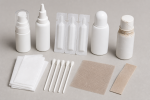
Direct answer: Choose lace tint spray by comparing its disclosed shade family, formula, warnings, compatible lace, spray pattern, drying directions, and washout limits with the actual wig base. Test on a separate off-head lace swatch from the same material when available, use the stated distance and number of light passes, and let each stage dry before judging color. View the dry swatch on both light and dark backings; wet tint can look different. Keep spray away from eyes, skin, hair, adhesive, and hardware unless directions explicitly permit contact. Replace a clogged, leaking, expired, separated, contaminated, or unpredictably spraying container.
Build a lace and shade reference before spraying
Record tint identity, formula and ingredients, warnings, shade name or code, compatible lace fibers and colors, spray distance, passes, drying interval, washout method, storage, expiration, lot, nozzle pattern, untreated lace, and dried swatches viewed on light and dark backings.
Identify tint as a color product for lace
A lace tint is intended to change the visible color of compatible lace or mesh. It is not adhesive, scalp protector, hair dye, root concealer, foundation, or proof that lace will disappear. Record the exact intended material and excluded surfaces. Do not use a color match alone to infer formula compatibility.
Compare shade family on neutral references
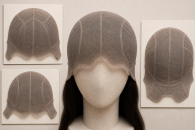
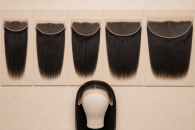
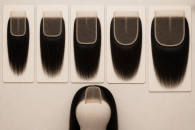
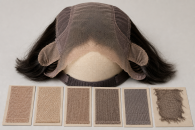
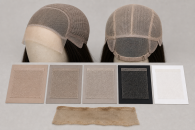
Place unopened products or maker swatches beside the dry untreated lace under neutral indoor light and indirect daylight. Compare undertone, depth, transparency, and contrast against both white and black backing. A bottle color or shade name can differ from the dry result and cannot replace an actual controlled material swatch.
Read formula, warnings, and ventilation directions
Record ingredients or formula disclosure, aerosol or pump format, flammability, ventilation, eye protection, skin exclusions, and cleanup. Keep ignition sources away where stated. Do not decant tint, combine shades in an unmarked bottle, add water or solvent, or assume that a non-aerosol pump is suitable for indoor use without ventilation.
Inspect nozzle and container while closed
Check cap, actuator, nozzle opening, dip tube when visible, body, seal, lot, and storage history. Look for cracks, leaks, dried color, clogging, corrosion, swelling, or a damaged protective cap. Do not clear a nozzle with a pin, blade, mouth, or high-pressure improvised method.
Choose a representative off-head swatch
Use spare lace from the same construction, shade, finish, and lot when possible. If no matching scrap exists, use a hidden test zone only when directions permit it and record the limitation. Mount the swatch on a clean protected backing without adhesive, hair, or skin. Keep an untreated reference beside it.
Control distance, angle, and number of passes
Follow the stated shaking, orientation, distance, motion, and pass count. Spray inside a protected ventilated work area away from people and surrounding products. Use light even movement and avoid pooling at edges, seams, knots, or folded mesh. More passes are not a reliable correction for a wrong undertone.
Dry completely before evaluating depth
Place the swatch flat in the specified drying environment and wait through the complete interval. Do not use unlisted heat, direct sunlight, or compressed airflow. Examine both faces for spots, rings, stiffness, clogged mesh, transfer, residue, and uneven saturation. Judge shade only after the product reaches its stated dry condition.
Compare under more than one backing and light
View the dried swatch over white, black, and a neutral backing under consistent indoor light and indirect daylight. Record whether the undertone shifts, mesh remains visible, or contrast changes. A close match on one backing does not establish invisibility on skin, camera, flash, or every environment.
Apply to the wig base only after swatch acceptance
Protect hair, knots, cap panels, elastic, combs, and work surfaces according to the directions. Keep lace relaxed and off-head. Apply the same controlled sequence used on the accepted swatch, without saturating edges or adding an adhesive layer. Stop if the spray pattern changes, nozzle spits, or material response differs.
Keep tint separate from attachment and cosmetics
Let the lace dry fully before adding any adhesive, tape, protector, makeup, or styling product. Verify that the product directions support the next step and that no color transfers. Do not spray over attached lace, refresh color near eyes, or use cosmetics to hide a visibly uneven or incompatible tint result.
Wash out and reassess material condition
Follow the compatible cleanser, water temperature, agitation, rinse, and drying method. Observe color release, staining, stiffness, residue, mesh distortion, and changes around knots or seams. One wash cannot establish permanent color or universal washout. Retire the tint route if the lace no longer returns to an acceptable clean flexible condition.
Store upright and retire unreliable spray
Clean the nozzle exterior only as directed, replace the cap, and store within stated temperature, light, and ventilation limits. Discard for expiry, unknown identity, leak, cracked container, clog that cannot be cleared by directions, sputtering, unexpected droplet size, separation, contamination, altered odor or texture, or missing shade record.
Decision table
| Checkpoint | Continue when | Stop or replace when |
|---|---|---|
| Shade | Dry swatch undertone and depth suit the actual lace | Decision based only on bottle color, wet tint, or one backing |
| Formula | Warnings, compatible lace, ventilation, and cleanup are known | Unknown transfer, mixed shade, or excluded material |
| Spray | Nozzle produces the stated controlled pattern | Clog, spit, leak, drift, pooling, or changed droplet size |
| Dry result | Mesh stays flexible, even, and free of transfer | Stiffness, spots, residue, clogged openings, or uneven saturation |
| Washout | Permitted cleaning preserves usable lace condition | Persistent residue, staining, distortion, or material damage |
Keep lace color outside hair and skin claims
FDA hair-product information provides cosmetic context but does not approve a specific lace tint or shade. AAD extension guidance concerns the worn hair system, not color matching. Use current tint directions, controlled swatches, and observable lace condition.
- FDA hair-products overview: Keep formula and color-product claims within current disclosure.
- AAD extension precautions: Evaluate the final wig system separately from off-head lace color.
- AAD traction guidance: Tint cannot correct a cap or attachment setup that pulls painfully.
Plan hair shade separately from lace tint
The related guides help with extension shade and placement. They do not establish spray formula, mesh compatibility, pass count, or dry undertone.
- hair crown extensions guide: separates hair shade from lace-swatch depth
- hair extension selection guide: keeps fiber choice outside tint application
- hair extension type guide: routes construction questions before lace coloring
Final checklist
- Formula, warnings, shade, lace compatibility, nozzle, and washout are documented.
- An untreated reference and representative off-head swatch are retained.
- Distance, angle, passes, ventilation, and drying follow current directions.
- Dry color is compared on light, dark, and neutral backings before wig application.
- Clogged, leaking, expired, contaminated, separated, or unreliable spray is discarded.
Describe a swatch without promising invisibility
A dried swatch that looks close under recorded lighting does not establish invisible lace, skin matching, color permanence, irritation-free use, camera performance, or the same result on another lace construction.
Lace tint spray is a shade, formula, nozzle, swatch, pass, drying, washout, and storage decision. Accept the result only after dry material behavior and color are both documented.