Women’s Haircuts: Texture, Shape, and Upkeep

Quick answer: Choose a haircut by texture, density, growth pattern, styling time, and upkeep. Bring references that resemble your starting hair and ask how the shape behaves without daily heat. This independent editorial page does not claim first-hand product testing, live inventory, or universal outcomes.
Quick answer: how do you choose a haircut?
Choose a haircut by matching the shape to your face-framing goals, hair texture, density, styling time, heat routine, and trim schedule. A cut that looks sharp in a photo can become hard to maintain if it needs daily heat, heavy tension, or frequent salon reshaping.


Start with the result you need
| Goal | Haircut direction | Planning note |
|---|---|---|
| Lower daily styling time | Soft bob, shoulder-length shape, or long layers. | Ask for a shape that air-dries neatly with your texture. |
| More volume | Light layers, shorter face frame, or blunt perimeter on fine hair. | Avoid removing too much weight if the hair is already sparse. |
| Face framing | Long curtain fringe, cheekbone layers, or jawline pieces. | Bring a photo and discuss where the shortest piece should sit. |
| Curl definition | Rounded layers, curl-by-curl shaping, or tapered length. | Cutting dry or partly dry can help show shrinkage and shape. |
| Shorter length | Pixie, cropped bob, or tapered cut. | Confirm grow-out shape and trim timing before cutting. |
| Grow-out flexibility | Lob, collarbone cut, or subtle layers. | These shapes are easier to reshape later. |
Face shape and feature framing guide
| Framing need | Useful direction | Salon conversation |
|---|---|---|
| Rounder face shape | Length below the chin, off-center part, or longer front pieces. | Ask how the cut keeps width away from the cheek area. |
| Oval face shape | Most lengths can work when texture and routine fit. | Focus the discussion on density, movement, and upkeep. |
| Square jawline | Soft layers around the jaw or collarbone. | Decide whether to soften the jawline or show it clearly. |
| Heart-shaped face | Chin-length movement, curtain fringe, or collarbone layers. | Check how the top section balances the narrower chin. |
| Long or narrow face | Side fringe, width near cheekbones, or shoulder length. | Limit long, flat, center-parted shapes if you want more width. |
| Strong cheekbones | Cheekbone layers, bob, or soft fringe. | Place the shortest pieces where you want attention. |
Texture and density matter more than the photo
| Hair type | Cutting direction | Care note |
|---|---|---|
| Fine hair | Blunt line, soft internal movement, or shorter length. | Too many layers can make ends look thinner. |
| Thick hair | Weight balancing, long layers, or a shaped bob. | Remove bulk carefully so the ends still sit cleanly. |
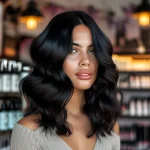
| Wavy hair | Long layers, collarbone length, or textured bob. | Discuss shrinkage and how the hair dries without heat. |
| Curly or coily hair | Rounded layers, tapered shape, or curl-aware cut. | Lower tension styling helps protect fragile bends and coils. |
| Straight hair | Clean bob, long layers, or fringe with clear maintenance timing. | Precision lines show grow-out quickly. |
| Thinning or fragile hair | Soft shape with less pulling, heat, and tight styling. | Use gentle handling and avoid styles that create strain. |
Haircut upkeep before you commit
| Choice | Question to ask | Why it matters |
|---|---|---|
| Bangs or fringe | How often will they need trimming? | Short pieces lose shape quickly. |
| Short bob | Will the line sit well with my natural texture? | A precise outline may need regular reshaping. |
| Pixie or crop | What will the grow-out look like in eight weeks? | Short cuts change shape fast. |
| Long layers | How much density will be removed? | Too much layering can thin the perimeter. |
| Curly or coily cut | Will shrinkage be considered before the final length? | The dry shape can sit much shorter than the stretched length. |
| Heat-styled shape | Can I wear it without daily hot tools? | Less heat can reduce dryness and breakage risk. |
Bobs, lobs, and shoulder-length cuts
A bob works well when you want a clean outline and can maintain the shape. A lob or collarbone cut gives more tying-back flexibility and usually has a softer grow-out. If your hair is very thick, ask where weight will be removed so the shape does not widen at the ends.
Pixie, crop, and tapered cuts
Short cuts can reduce drying time and show facial features clearly, but they need a grow-out plan. Ask your stylist how the sides, neckline, and fringe will look between appointments.
Layers, face frames, and fringe
Layers can add movement, but they should match density. A face frame can change the look without removing too much length. Fringe needs daily behavior checks: cowlicks, oil, glasses, forehead shape, and drying routine all matter.
Curls, coils, and protective routine fit
Curly and coily hair should be planned around shrinkage, density, and tension. AAD guidance for textured hair emphasizes gentle handling, conditioning, and avoiding high-tension styles that pull on the scalp.
Healthy-hair checks before and after the cut
A haircut should support hair condition, not fight it. The American Academy of Dermatology advises gentle brushing, careful heat use, and avoiding habits that can contribute to breakage. If ends are brittle or the scalp is irritated, choose a lower-tension shape and delay chemical services.
What to bring to the salon
- Two or three haircut photos with similar hair texture and density.
- A clear note on how often you use heat tools.
- Your usual part, washing schedule, and drying routine.
- One photo of a length or fringe you do not want.
- A trim schedule you can realistically maintain.
Editorial note
This page is a haircut planning guide, not a medical article or product ranking. Product suggestions should be added only after current availability, image rights, disclosure, ingredient, and article-fit checks.
Sources
- American Academy of Dermatology: Healthy hair tips
- American Academy of Dermatology: Habits that damage hair
- American Academy of Dermatology: Styling without damage
- American Academy of Dermatology: Caring for African American hair
Frequently asked questions
What haircut is easiest to maintain?
A lob, shoulder-length cut, or soft long-layer shape is often easier to maintain because it can be worn down, tied back, and reshaped without a major grow-out problem.
Are bangs a good choice if I do not style daily?
Bangs can work, but they need a realistic check for cowlicks, oil, glasses, sweat, and trimming frequency. Curtain fringe is usually more flexible than a very short blunt fringe.
What haircut helps fine hair look fuller?
Fine hair often looks fuller with a clean perimeter, shorter length, or light movement instead of heavy layering. Ask the stylist to keep enough density at the ends.
What haircut works for curly or coily hair?
Rounded layers, tapered shapes, and curl-aware cuts can work well when shrinkage and density are considered. The cut should support lower-tension styling and your wash routine.
How often should I trim a haircut?
Trim timing depends on length, shape, hair condition, and how fast the outline changes. Short cuts and bangs need maintenance sooner than long layers or collarbone cuts.
Related Beauty Supply Reviews guides
Continue with this related guide and this next-step guide. These links support reader navigation rather than a product or outcome claim.
Core editorial sources
- https://www.aad.org/public/everyday-care/hair-scalp-care/hair/healthy-hair-tips
- https://www.aad.org/public/diseases/hair-loss/causes/hairstyles