Purple Hair Tutorials (Simple Step by Step)

Your hair is a feature in your body that helps you to enhance your beauty. With so many ways to make your hair, you always have a way to look stunning with a new hair look now and then. Do you plait or just comb your hair to stand out?
You can pull your hair up, comb it down or hold it in a ponytail. You can also opt to braid your hair into a beautiful hairstyle like fishtail braid. All this are ways to make your hair look different and stunning every day you walk out. Have you ever tried dyeing?
This has become the new trend. Long gone are the days when women used to stick to one hair colour all their life. New trends are coming up of many ways in which you can dye your hair and still look gorgeous and stunning. Think of going bright, wondering how?
If you have already considered a possibility of dying your colours, you don’t have to be safe when it comes to the colours. Bright once have become popular and more and more people are exploiting different colours available in the market. One of the colours is purple.
Colour purple is becoming more popular and trending among women. From the common girls to celebrities, the colour is being tried out and becoming favourite among many people around, what is it about colour purple that is making it trend.
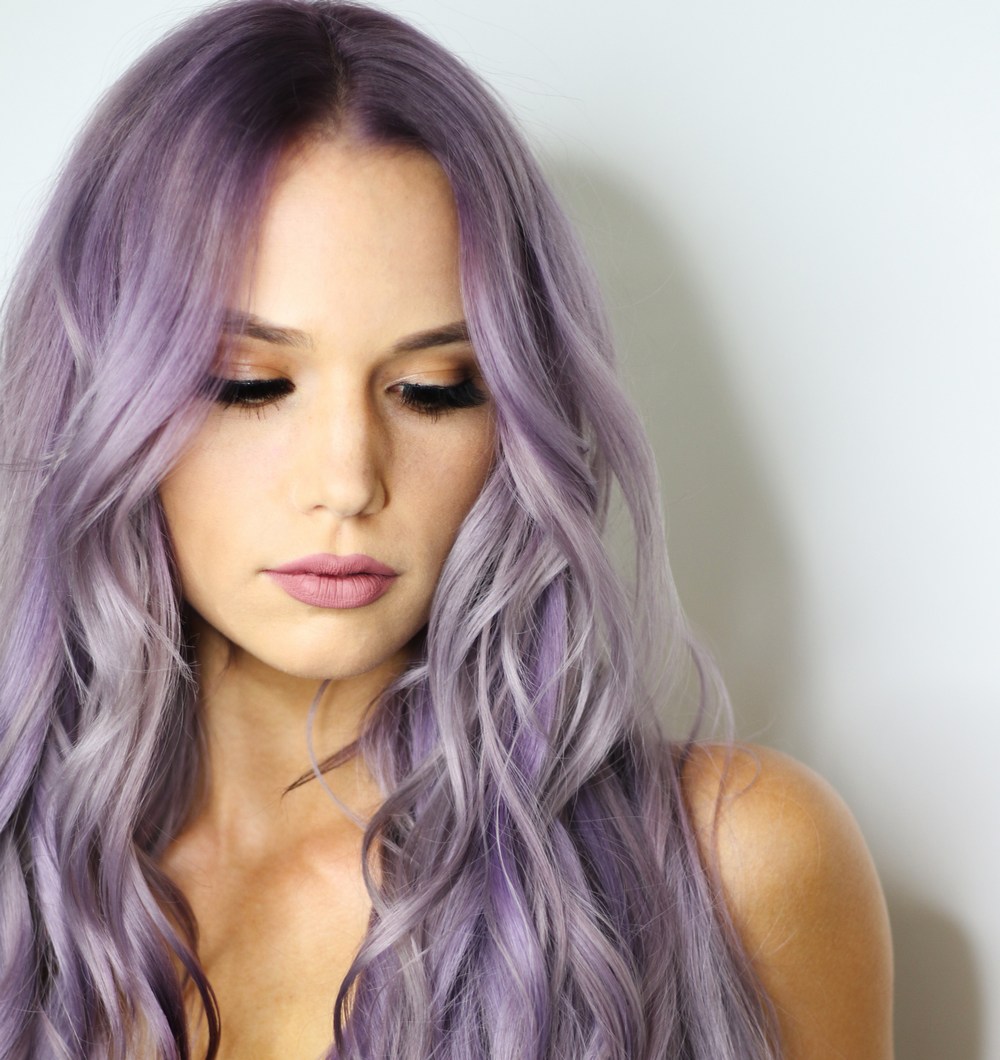
Purple Hair
It is a beautiful colour to wear that’s for sure and you will pop out when you have it. it also has a lot of shades to choose from so you will always have a choice to choose from. From dark indigo to pastel lilac, when you opt for the colour, you will be wowed by the varieties.
When it comes to dying there are so many ways you can do it, you can go for a full head or you can go for a partial part of your hair. You can also do temporary, semi-permanent or you can go for a permanent colour change. The choice lies in your hand.
If you want to go the purple ay, there are details you should know before you dye your hair. That will make you aware of what you are about to do and give you ideas on how you are supposed to maintain your look. for you to dye your colour, follow the following step by step purple hair tutorials;
-
Choose
Like mentioned earlier, there is a lot of shade to choose from. That means you have a lot of choices where you can either go wrong or right. you need to choose which shade you want to choose from so that you can know how to go around it.
There are facts you need to consider. If you have dark hair, it will be easier for you to choose a darker colour. The same will apply to light hair, you need to consider going with lighter colours. That is because there is bleaching involved and one must look at the bleaching process.
If you have a dark natural hair, you need to bleach your hair to pale yellow color before you dye purple so, if you decide to go for a light shade of purple, you might require to bleach your hair more than once so that you can dye your hair to a lighter color which will be damaging to your hair.
-
Nature your hair before dying
It involves a lot of TLC. Yes, you need to love your hair and pamper it before the process. That is because the bleaching and the dying will cause a lot of changes in your hair structure. Make sure your hair is in good form before the whole process begins.
-
Assemble what you need for the whole process
Assembling means you going to the stores and shop for the right products. Remember cheap is expensive so make sure you invest well in the products that you are going to use for your hair. After doing that, you need to have them at one place before you start.
For you to apply the bleach and the dye effectively, you need to have;
- A bleaching kit.
- Hairbrush and comb.
- An old t-shirt that you won’t needs after this.
- Gloves.
- Vaseline.
- Shampoo, conditioner and applicator brush.
- Purple hair dye.
- 3 plastic bowl.
-
Prepare well
Without beating around the bush, dying your hair can be messy, if you are not careful, you will end up with purple colour all over your hands and even your skin. You need to cover well with an old towel and wear the old t-shirt mentioned.
You need to start up by tangling your hair with a comb or a brush, make sure that your hair is unwashed and dry. Divide the hair into four equal parts and hold them to keep them intact with the clips. You can wear your gloves and prepare for the next step.
-
Bleaching
This is a very vital step that you cannot afford to go wrong. You need to make sure you invest in a good bleach that will be gentle to your hair while still serve the purpose. Remember cheap bleach will damage your hair and not give you the highlight you require. Once you have the bleach, you need to read instruction well before you use.
After reading, you need to mix the developer and the bleach in a bowl. Start with applying to the lower part of your hair. Apply each part that you dived earlier to make sure you have an even look. the upper side of the hair should be the last to be applied.
You need to apply the bleach fast so that an even colour is achieved. Once you are done with the upper part of your hair, you need to take the applicator brush and spread the bleach on the edges of your hair. Wait for the recommended time.
Once the time is up, you need to gently wash the bleach out. Use the shampoo to make sure all the bleach is completely washed out. You need then to condition your hair with a good colour conditioner. If you have not achieved the required colour, you might need to bleach the hair after two to three weeks.
-
Dyeing the hair
This is the aim of all this, getting that vibrant colour that you want. Now that you have bleached your hair to the required foundation colour, you need to proceed right to dyeing. Remember that here, you need freshly washed and dry unconditioned hair.
Start by tangling any hair. Make sure the hair is loose and free to comb. You need to divide it into four parts that you can easily work with. Make sure that you have covered your self well to avoid any staining in case of a messy incident and use the gloves for your hands.
Take the Vaseline and apply along your hairline, the forehead, ears and the neck. This is to make sure no irritation and dye will reach the skin. In the two bowls, you need to put the purple dye on one bowl and on the on the other put the same dye diluted with a conditioner.
Start applying the dye by applying the purple dye onto the highlighted upper part of your hair. If you have a natural light hair, it’s safe to apply from the bottom of your hair. Now as you are moving down, you can start fading the colour using the diluted dye in the other bowl.
The rule to remember is to use the colour heavily at the start then go lightly towards the finish of the hair. Once you are done with the lower part, you can now repeat the same procedure on the top of the hair then wait for the recommended time.
Once the time is up, you need to wash the dye completely with a colour protecting shampoo and conditioner and then dry your hair and style as you like. There are so many hairs do that you can do to complement the colour form fishtail braid to curling the hair and letting it loose.
Things you need to remember
- You need to be realistic when choosing the colour. This will help you find the perfect shade.
- Pamper your hair before the process to avoid any hair loss.
- prepare well to avoid any mess.
- quality is key when it comes to dyeing.
- Seek professional help if unsure of anything
- Retouch is a must if you want to keep the look longer.
If you are ready for a change, purple is the way to go. With the many ranges to choose from, you are sure you can never get it wrong with the right information. All you need id gain the courage and go for the colour you want and just apply it. make sure you find the right information and you will be good to go.