Prom Hairstyles: Length, Hold, and Comfort

Quick answer: Choose a prom hairstyle from the real starting hair, event conditions, neckline, available preparation time, and comfort tolerance. A secure style should survive planned movement without causing scalp pain or depending on promises of flawless all-night hold. This independent editorial guide does not claim first-hand product testing, diagnose, prescribe, or guarantee a result.
Start with the event rather than a trend photo
List the actual constraints: indoor or outdoor venue, humidity, wind, dancing, travel, photography, headwear, dress changes, and the number of hours between styling and removal. A loose wave, half-up design, braid, ponytail, bun, or pinned updo handles those conditions differently. The most elaborate option is not automatically the most suitable.
Check the outfit neckline, back detail, earrings, glasses, and any hair accessory together. Hair that covers a feature in one photo may be the right choice for comfort, while a high style can expose pins or create weight. Use reference images to communicate shape and finish, not as a guarantee that another person's density and length can be duplicated.
Map length, texture, density, and layers
Measure usable length after shrinkage or curl pattern is considered. Fine, dense, straight, wavy, curly, coily, layered, blunt, fragile, and extension-supported hair can hold identical shapes differently. Short layers may escape a polished braid, while very dense long hair can make a high updo heavy. Build around those facts instead of fighting them with tension.
Record recent bleach, color, relaxer, perm, heat damage, shedding, and scalp sensitivity. Fragile ends may need a simpler low-manipulation design. Extensions require attention to attachment points and weight distribution. Sudden loss, bald patches, sores, or unexplained scalp pain should be assessed rather than hidden under a tight event style.
Select a structure with a clear anchor
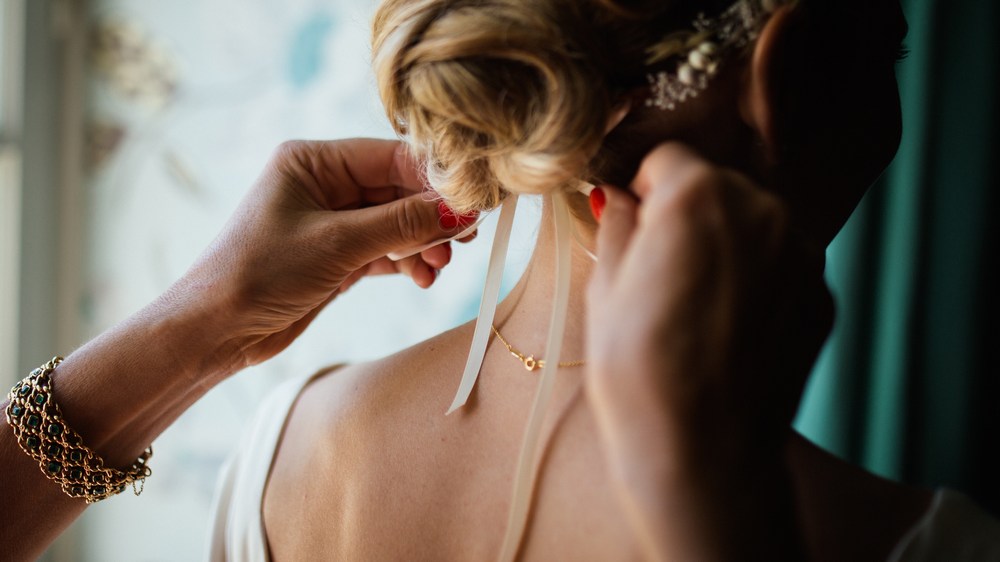
Down styles rely on texture preparation and weather resistance. Half-up styles anchor only part of the weight. Ponytails and buns concentrate load, while braids distribute it along a path. Decide where the style will be anchored and whether that location stays comfortable when sitting, leaning against a car seat, or moving for photographs.
Use smooth elastics, pins, combs, clips, or padding sized for the amount of hair. More hardware does not always create more security; poorly placed pins can scratch, catch, or shift weight. Test the anchor before adding decoration, then use only the support needed to keep the planned structure stable.
Plan heat and product as separate choices
A prom style can use air-dried texture, rollers, braids, twists, or heat tools. If heat is chosen, work on appropriately prepared hair, follow tool and product directions, use the lowest effective setting, and avoid repeated passes over fragile sections. Heat does not guarantee that curls will last through humidity or movement.
Choose mousse, gel, cream, wax, powder, spray, or shine products for a defined task such as grip, flyaway control, flexibility, or finish. Layering every hold product can create stiffness, residue, flaking, or difficult removal. Test how the complete combination behaves on the actual hair before event day.
Run a full rehearsal
Practice the complete style far enough in advance to change the plan. Time cleansing, drying, detangling, sectioning, tool heating, pinning, accessory placement, touch-up, and cleanup. Photograph the front, sides, back, and crown in ordinary light and flash because mirrors can hide gaps or visible hardware.
Wear the rehearsal while walking, sitting, turning the head, and changing clothing. Note where pins press, curls collapse, layers escape, or accessories rotate. A rehearsal is useful even with a stylist because it reveals whether the concept fits the hair and event. Record the products, section map, and corrections that worked.
Keep tension below the pain threshold
The cited dermatology guidance warns that repeatedly tight hairstyles can contribute to traction-related hair loss. A formal style should not require headache, burning, sharp pulling, or persistent tenderness. Loosen an anchor that hurts rather than assuming discomfort is the cost of hold. Hairline edges and extension points deserve particular care.
Check tension again after accessories and veils are attached because added weight can change the load. Rotate pins or distribute the style across a broader base when possible. If the scalp is already sore from a rehearsal or previous style, choose a lower-tension design instead of repeating the same stressed position.
Prepare accessories as functional parts
Inspect combs, crystals, pins, flowers, ribbons, and decorative clips for rough seams, sharp edges, loose pieces, excess weight, and color transfer. Confirm how each item attaches and whether it can be removed without cutting or tearing hair. Heavy decoration may need its own anchor rather than hanging from a few strands.
Place accessories after the underlying style is stable. Keep backups for small pins and elastics, but do not repair a failing anchor by adding hardware until it becomes painful. If an item belongs to a venue or rental package, clarify return and cleaning expectations before applying adhesive or product to it.
Create a compact touch-up and backup plan
A useful kit can include compatible pins, one elastic, a small amount of the chosen product, blotting material for the hairline if needed, and instructions for a trusted helper. Avoid carrying unrelated products that have not been tested with the style. A touch-up should restore the existing structure, not start a new chemical or heat process at the venue.
Define a simpler fallback before the event: release a failing updo into a low ponytail, convert loose sections into a braid, or remove a heavy accessory. Practice that transition once. A backup reduces the temptation to tighten painful pins or apply excessive spray when weather or movement changes the original plan.
Remove the style deliberately
At the end of the event, remove accessories and pins in a known order while supporting the hair. Unwind braids and elastics from the ends upward, then separate tangles with fingers before using an appropriate detangling method. Do not pull through a sprayed or pinned style when tired, and do not sleep on sharp hardware.
Note any broken strands, sore areas, difficult residue, or accessory damage. Adjust the next formal style rather than repeating a painful configuration. A successful prom hairstyle is one that fits the occasion, remains reasonably stable, photographs as intended, and comes out without avoidable stress.
Related Beauty Supply Reviews guides
Editorial sources
- https://www.aad.org/public/everyday-care/hair-scalp-care/hair/healthy-hair-tips
- https://www.aad.org/public/diseases/hair-loss/causes/hairstyles