Drugstore Cream Eyeshadow: Budget Formula and Application Guide

Drugstore cream eyeshadow is worth choosing when you want a budget-friendly lid color that is quick to apply, easy to blend, and available in everyday neutral finishes. The clean choice depends on format, shade depth, finish, label directions for eye-area use, tool preference, and how the formula behaves on your lids.
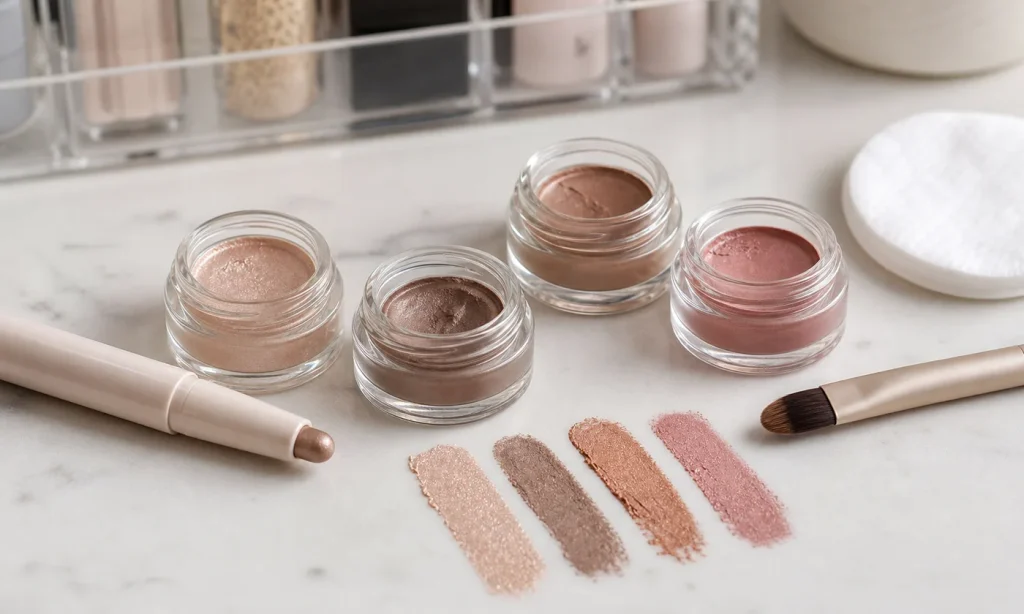
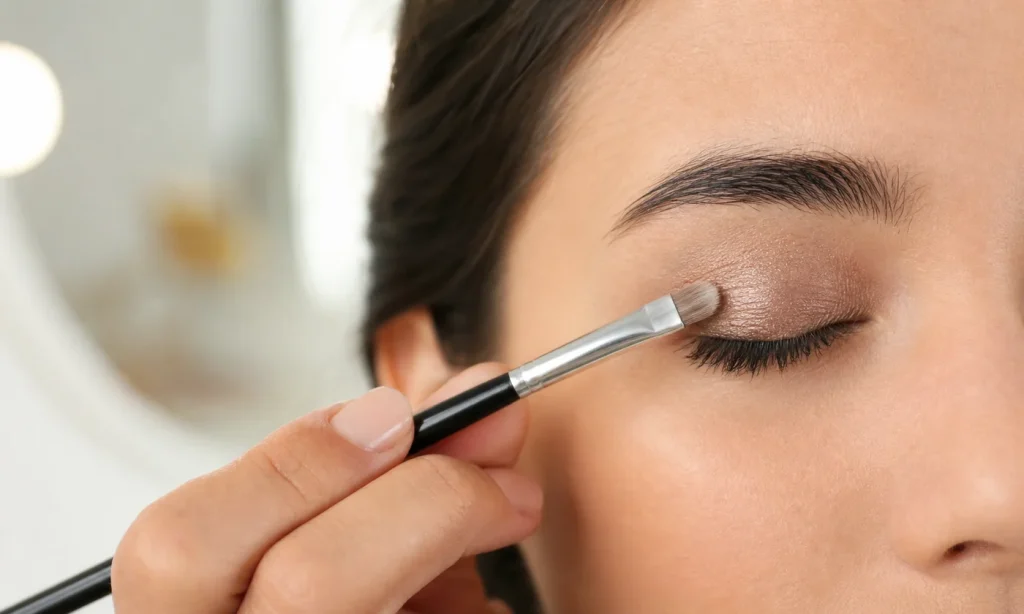
Quick Answer: How to Choose Drugstore Cream Eyeshadow
Choose drugstore cream eyeshadow by matching the format to your routine first. Pots give flexible fingertip or brush use. Sticks are faster and cleaner for travel. Liquid creams suit precise placement when you like a thin layer. Then check the finish, eye-area label directions, and removal plan before comparing shades.
| Need | Better format | What to check | Related guide |
|---|---|---|---|
| Fast one-shade lid | Cream shadow stick | Glides evenly and caps tightly | Eyeshadow stick guide |
| Soft blended wash | Cream pot | Texture spreads thinly with finger or brush | This page |
| Precise shimmer accent | Liquid cream shadow | Small applicator and label-supported eye placement | Liquid eyeshadow guide |
| Extra grip under powder | Eye primer plus powder shadow | Lid prep is the main issue | Drugstore eyeshadow primer |
| Multi-shade eye look | Powder palette | Depth, transition shade, and finish range | Neutral palette guide |
Drugstore Cream Eyeshadow vs Cream Eyeshadow vs Eyeshadow Stick
This page is the budget and drugstore-specific buying guide. The broader cream eyeshadow page covers formula and finish decisions across the category. The eyeshadow stick page covers stick format in more depth. Keeping those intents separate helps readers and search systems pick the most useful page.
| Intent | Best page | Main decision | Path |
|---|---|---|---|
| Budget cream shadow from drugstore shelves | Current page | Format, shade, cost, and basic label checks | Current page |
| Any cream eyeshadow formula | Broad cream eyeshadow guide | Texture, finish, and wear planning | Best cream eyeshadow |
| Twist-up or crayon-style shadow | Eyeshadow stick guide | Stick shape, application speed, and sharpening or cap design | Best eyeshadow stick |
| How to place cream shadow on the lid | Application guide | Tools, placement, blending, and cleanup | How to apply cream eyeshadow |
| Shadow moves or gathers | Primer guide | Lid prep and base layer choice | Drugstore eyeshadow primer |
Budget Formula Checklist
A drugstore price does not make a cream shadow useful by itself. Look for texture, packaging, shade clarity, and the way the product handles with simple tools. The formula should spread in a thin layer without needing heavy pressure or several passes.
| Check | What to look for | Why it matters |
|---|---|---|
| Texture | Smooth cream that thins out evenly | Patchy texture is harder to blend on a small lid area |
| Packaging | Pot closes tightly or stick cap clicks securely | Cream products can dry out when left open |
| Shade clarity | Color looks close to the swatch once blended | Budget shimmer can shift lighter under bright light |
| Finish | Matte, satin, shimmer, or metallic is clear | Finish affects placement and how much texture shows |
| Tool fit | Works with fingertip, brush, or built-in applicator | The right tool keeps the routine simple |
| Removal | Comes off with your usual eye makeup remover | Darker shades and shimmer need patient cleanup |
Shade and Finish Planning
Neutral shades usually give the most value because they work alone, under liner, or with powder shadow. Champagne, taupe, bronze, rose, cocoa, and soft plum are useful starting points. Very pale shimmer, very dark matte, and chunky sparkle need more careful placement.
| Shade family | Good use | Finish to consider | Watch point |
|---|---|---|---|
| Champagne | Inner corner or lid center | Fine shimmer or satin | Can look frosty if applied too broadly |
| Taupe | One-shade everyday lid | Satin or soft matte | Choose depth by skin tone and lid space |
| Bronze | Warm simple eye look | Satin or metallic | Use a thin layer in daylight |
| Rose | Soft lid color | Satin or pearl | Keep edges clean if the eye area looks naturally pink |
| Cocoa | Outer corner depth | Matte or satin | Blend before it sets |
| Plum | Evening accent | Satin or muted shimmer | Use less on the lower lash line |
Eye-Area Label and Color-Additive Checks
FDA eye cosmetic and color-additive resources point to a practical rule: use cosmetics only where the label supports that placement. Some colorful or novelty products are sold for face or body use but are not meant for the eyelid or close eye area. This matters even for low-cost makeup.
| Product question | Check first | Use another option when |
|---|---|---|
| Is the cream labeled for eyes? | Read the placement directions on the package | The label only names face, cheek, body, or costume use |
| Is the shimmer gritty? | Texture should feel smooth on a swatch | Particles look large or rough |
| Is the shade a novelty color? | Check cosmetic labeling and color-use directions | It resembles craft pigment or unclear body paint |
| Is the tester clean? | Use disposable tools and avoid direct contact | The tester is open, messy, or shared directly |
| Has the texture changed? | Look for dry, separated, or unusual texture | The cream no longer spreads normally |
Step-by-Step Application Routine
Use a thin application method, especially with budget cream formulas. A thin first layer shows how the shade behaves before you add depth. Check the shape with eyes open, because cream shadow can look different once the lid folds naturally.
- Start with clean, dry lids and decide whether the cream shadow is the main color or a base.
- Pick up a small amount with a fingertip, flat brush, or built-in applicator.
- Place the color on the center of the lid or close to the upper lash line.
- Blend the edge while the texture is still workable.
- Add a second thin layer only where more color is needed.
- Use powder shadow or liner after the cream layer has settled.
- Clean the outer edge with a cotton swab before mascara.
- Remove the shade patiently at the end of wear, especially if shimmer is present.
How to Reduce Movement Without Overclaiming
Cream eyeshadow can move, gather, or fade depending on lid shape, oil, humidity, product texture, and how much is applied. No budget formula should be judged by broad promises alone. Match the layer thickness, finish, primer choice, and setting step to the way your lid usually behaves.
| Issue | Adjustment | Why it helps |
|---|---|---|
| Color gathers in a lid fold | Use a thinner layer and blend the crease edge | Less cream sits in the moving area |
| Shade fades quickly | Use eye primer or place powder shadow over the cream | The cream has a base layer to grip |
| Shimmer falls below the eye | Keep shimmer on the lid center and clean before mascara | Cleanup is easier before lashes are coated |
| Color looks patchy | Warm a small amount on fingertip or use a flat brush | Thin placement gives more control |
| Edges look heavy | Blend with a clean brush, not more cream | A clean tool softens without adding product |
Tools, Removal, and Brush Hygiene
AAD brush-cleaning guidance is useful for cream shadow because tools touch product and skin repeatedly. Keep brushes clean and dry, close cream products tightly, and avoid mixing old product texture into a fresh look. A cotton swab and makeup remover should be part of the routine, not an afterthought.
| Item | Use | Check |
|---|---|---|
| Fingertip | Quick one-shade lid | Hands should be clean and dry |
| Flat synthetic brush | Even placement and edges | Wash and dry on a steady schedule |
| Small blending brush | Softening the edge | Use clean bristles, not leftover dark shadow |
| Cotton swab | Edge cleanup | Use before mascara when possible |
| Eye makeup remover | End-of-wear removal | Let product loosen before wiping |
| Caps and lids | Storage | Close immediately after use |
How This Page Fits the Eyeshadow Cluster
This page should answer drugstore cream shadow buying and use questions. It should not duplicate the broad cream eyeshadow page, the application tutorial, the eyeshadow stick guide, or the primer guide. Use internal links when the search intent moves away from budget cream shadow selection.
| Search intent | Best internal page | Reason | Path |
|---|---|---|---|
| Budget cream shadow buying | Current page | Drugstore price, format, and routine are central | Current page |
| Any cream shadow formula | Best cream eyeshadow | Broader formula and finish comparison | Best cream eyeshadow |
| Application technique | How to apply cream eyeshadow | Placement and tool sequence are central | Application guide |
| Stick format | Best eyeshadow stick | Crayon shape and fast placement are central | Eyeshadow stick guide |
| Powder color intensity | Pigment eyeshadow | Pressed or loose pigment is a different format | Pigment eyeshadow guide |
| Brown-eye palette planning | Brown eye palette guide | Multi-shade palette planning is central | Brown eyes palette guide |
Common Mistakes
- Buying the lowest price without checking the texture, cap, or shade behavior.
- Using a body or face color product near the eye without label support for that placement.
- Applying a thick layer first and then trying to blend after it settles.
- Choosing a pale frosty shade for the full lid when only a center highlight is needed.
- Ignoring the broader cream eyeshadow or eyeshadow stick page when the question is not drugstore-specific.
- Keeping a pot open while doing the rest of the face, which can dry the product faster.
Sources
- FDA: eye cosmetic safety
- FDA: color additives and cosmetics fact sheet
- FDA: color additives permitted for use in cosmetics
- AAD: how to clean makeup brushes
FAQ
What is drugstore cream eyeshadow?
Drugstore cream eyeshadow is a cream, stick, pot, or liquid-style eye color sold at a budget-friendly retail price. It is usually chosen for quick lid color, easy blending, and simple neutral shades rather than complex multi-shade eye looks.
How do I apply drugstore cream eyeshadow?
Apply a small amount to the lid with a fingertip, flat brush, or built-in applicator, then blend the edge while the texture is workable. Add extra color only where needed after the first layer settles.
Which finish is easiest for beginners?
Satin and soft shimmer are often easier than very matte or highly metallic finishes because they blend visibly without needing a sharp edge. Taupe, champagne, bronze, and rose shades are practical starting points.
Can I use cream eyeshadow as a base?
Yes, if the texture is thin and the shade works under powder shadow. Let the cream layer settle before adding powder or liner so the next product sits evenly.
Should I buy a pot, stick, or liquid cream shadow?
Choose a pot for flexible fingertip or brush use, a stick for speed and travel, and a liquid cream when you want precise placement. The right choice depends on routine, lid space, and cleanup preference.
How do I keep cream eyeshadow from gathering?
Use less product, blend the fold area while the cream is workable, and consider primer or a light powder shadow layer when your lid makeup usually moves. Thin layers are easier to adjust than one heavy layer.
Is shimmer okay for everyday cream eyeshadow?
Fine shimmer can work for everyday use when the shade is neutral and the placement is controlled. Keep the brightest shimmer on the lid center or inner corner if a full reflective lid feels too strong.
How should I remove cream eyeshadow?
Use an eye makeup remover or cleansing method that loosens the product before wiping. Darker shades and shimmer need patient removal along the lash line and lid edge.