Black Nail Polish: Finish, Formula, and Safety Guide

Quick answer: choose black nail polish by finish, opacity, brush control, drying needs, removal method, and the condition of your nails. A glossy cream that applies evenly in two thin coats is the most versatile starting point. Matte, shimmer, jelly, glitter, and gel formulas create different looks and have different wear and removal tradeoffs.
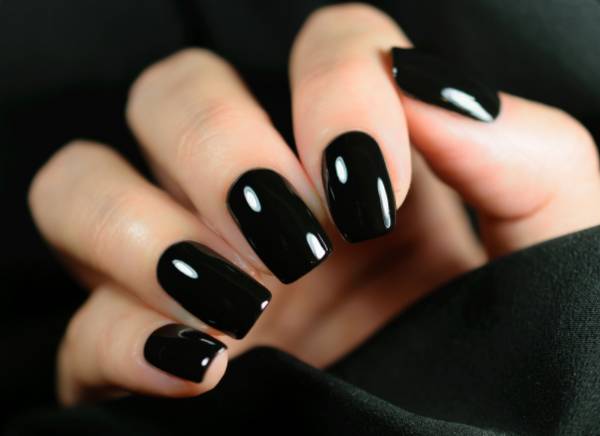
Black Nail Polish Finish Guide
| Finish | Best use | Tradeoff |
|---|---|---|
| Glossy cream | Classic everyday manicure | Patchy application is easy to see |
| Matte | Graphic or soft-focus look | Oil and tip wear can change the finish |
| Jelly | Layered translucent depth | Often needs more coats for opacity |
| Shimmer or metallic | Dimension in direct light | Brush marks may show |
| Glitter | Accent nails and special events | Removal usually takes longer |
| Gel | Longer wear with proper curing | Needs compatible equipment and careful removal |
What Makes a Black Polish Easy to Apply?
Opacity
Black pigment exposes streaks, flooding, and uneven edges quickly. Look for a formula that levels in two thin coats rather than requiring one very thick layer. Thick coats can dry slowly at the surface and remain soft underneath.
Brush shape
A flat or gently rounded brush can fan near the cuticle with fewer strokes. Narrow brushes offer precision on small nails but may leave more overlap lines. The best brush is the one you can control without touching surrounding skin.
Drying and top coat compatibility
Check whether the manufacturer recommends a specific base or top coat. A quick-dry glossy top coat can deepen black cream, while a matte top coat changes both shine and visual texture. Do not assume a regular lacquer can be cured like gel or that every lamp works with every gel system.
Selection by Nail Length and Style
Short nails can carry opaque glossy or matte black with a clean edge. Medium nails work with nearly every finish. On long nails, shimmer, negative space, black French tips, or one accent nail can reduce the visual weight of a full opaque manicure. These are style options, not rules; the practical concerns are application control and comfortable wear.
Application Checklist
- Remove old polish gently and wash away residue.
- Shape the free edge without aggressively thinning the nail plate.
- Apply a compatible base coat, especially if dark pigment tends to stain your nails.
- Use two thin black coats and allow each to level according to the label.
- Keep polish off the surrounding skin and clean small mistakes promptly.
- Seal with the finish-appropriate top coat and allow complete drying or curing.
If removal is your main concern, compare our nail polish remover guide and the lower-tool methods in how to remove polish without standard remover.
Regular Polish Versus Gel
Regular lacquer is easier to change at home and does not require a curing lamp. Gel can provide a glossy, durable finish when the system is applied and cured correctly, but removal should not involve peeling or forceful scraping. The American Academy of Dermatology advises against picking or filing gel polish off because these methods can damage nails.
Choose regular polish when frequent color changes and simpler removal matter most. Choose gel only when you understand the compatible lamp, curing directions, skin-exposure precautions, and removal process. A “gel effect” regular top coat is not the same as a true light-cured gel system.
Nail Product Safety
The FDA advises reading nail-product labels, following warnings, using good ventilation, and avoiding eye exposure and ingestion. Nail products can also be flammable. Some ingredients may cause irritation or allergic reactions in susceptible users. Stop using a product if redness, swelling, pain, or a persistent rash develops, and seek professional care when symptoms are significant or do not resolve.
Do not call a polish “non-toxic” solely because it excludes a short marketing list of ingredients. Cosmetic formulas can contain many ingredients, and absence claims do not prove universal safety. Review the current ingredient panel and use the product only as directed.
What This Guide Does Not Rank
This guide does not claim that a changing retailer assortment, current price, review score, or one brand is permanently best. Stock and formulas change. Compare the bottle and label available to you, then choose the finish and system that fit your application and removal plan.
Sources
Frequently Asked Questions
How many coats of black polish should I use?
Two thin coats are a useful starting point for most opaque lacquers, but follow the formula’s directions and adjust for its opacity.
How can I reduce staining?
Use a compatible base coat, keep pigment off surrounding skin, and remove the color gently rather than scrubbing or scraping.
Is black gel polish better than regular polish?
It is not universally better. Gel may wear longer, while regular polish is easier to change and remove. The best choice depends on equipment, maintenance, and nail condition.