Hooded Eye Makeup: Placement and Safety Guide

Quick answer: For hooded eyes, map shadow and liner with the eyes open so the visible lid and fold guide placement. Use thin layers, clean tools, eye-area cosmetics, and gentle removal. This independent editorial guide does not claim first-hand testing, does not diagnose or prescribe, and does not promise a particular result.
Map the visible crease with eyes open
Relax the brow and look straight ahead, then mark where depth remains visible above or around the natural fold. Eye shapes vary, so use the individual's visible space rather than copying a fixed diagram.
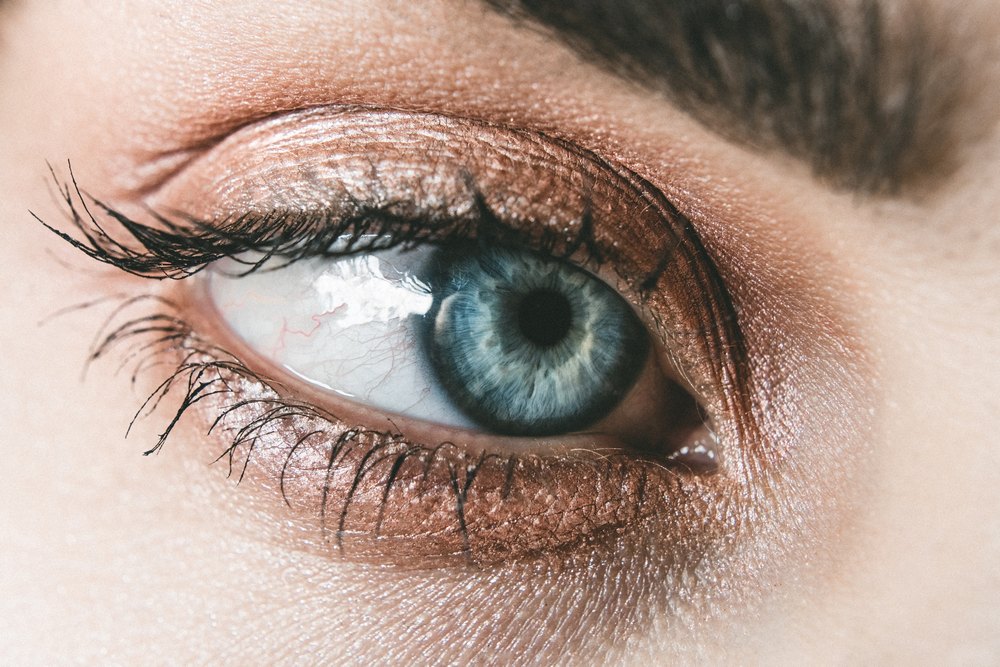
Keep lid layers thin and controlled
Apply small amounts, blend edges gradually, and check transfer before adding more. Cream, powder, and liquid formulas can behave differently on texture and folds, so no format is automatically crease-proof.
Adapt liner to the available lash line
Begin thin near the lashes and build the outer shape with the eyes open. A short outward or slightly lifted extension may remain more visible than a thick band. Avoid pulling the eyelid hard or applying in motion.
Use only eye-area products and clean tools
Confirm color additives, glitter, liner, and adhesive are labeled for the intended eye area. Wash hands, keep brushes clean, avoid shared testers, and stop for persistent irritation, pain, swelling, discharge, or vision change.
Begin with a neutral open-eye map
Face the mirror directly, relax the brows, and keep both eyes open. Mark where the fold covers the mobile lid and how much color remains visible above it. Do not pull the brow upward to create a temporary canvas. The working crease may sit slightly above the anatomical fold, but placement should follow the individual’s visible space rather than a copied diagram.
Set a thin base only where needed
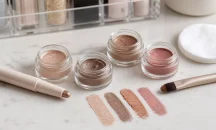
Use a small amount of eye-area primer or suitable base according to its label. Too much creamy product can gather in the fold before shadow is applied. Let the layer settle, then check for stinging or watering. The cream eyeshadow guide explains why texture, set time, and layering change transfer behavior.
Place the transition shade with eyes open
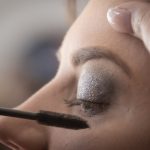
Look forward and tap a soft midtone where it remains visible above the fold. Blend the upper edge in small motions without carrying color automatically to the brow. Close the eye only to connect gaps, then reopen to verify height. Work one eye at a time in short passes so natural asymmetry can be accommodated rather than concealed with increasingly large shapes.
Deepen the outer structure in a compact zone
Place a deeper matte shade at the outer lash line and slightly above the fold, keeping the darkest point controlled. Blend inward only as far as the intended shape. A lifted-looking diagonal is an artistic placement, not a physical eye lift. The eyeshadow guide provides broader texture and color questions.
Reserve shimmer for a visible focal area
Tap shimmer on the inner or center mobile lid where it remains visible when the eye opens. Fine, controlled particles are easier to place than loose fallout near the eye. Use only products labeled for the eye area; craft glitter and unapproved pigments do not belong near the eye. Keep shimmer away from irritated skin and stop if particles enter the eye.
Draw liner while looking forward
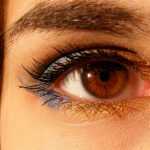
Start with a thin line between or just above the upper lashes. Mark the outer direction with the eye open before connecting it. A short tapered extension may remain more visible than a thick wing that folds into the crease. The beginner eyeliner guide covers grip and stroke control. Do not line inside the eye unless the product specifically permits that use.
Use a bat-wing only when the fold interrupts a wing
With the eye open, mark the visible wing boundaries. Close the eye and connect them, accepting that the resulting shape may look stepped on the closed lid. Reopen and refine only the visible silhouette. This graphic method is optional and depends on fold position. It is not necessary for a polished hooded-eye look.
Balance lower-lash color against the upper shape
A small amount of shadow on the outer lower lash line can connect the structure, but heavy dark color may dominate limited upper-lid space. Use a clean small brush and keep product out of the eye. Leave the lower line bare when eyes are irritated, watering, or when the chosen cosmetic is not labeled for that area.
Place mascara without forcing the lash line
Curl lashes only with a clean undamaged tool and no pinching. Apply mascara as labeled, keeping the wand away from the eye surface. A formula that transfers to the fold may need less product, more drying time, or a different formula, not additional powder on irritated skin. Never add water or saliva to a drying mascara.
Correct transfer by changing one variable
If shadow or liner stamps above the fold, record whether the base was heavy, layers were thick, set time was short, skin was oily, or the formula remained creamy. Change one factor in the next trial. Do not claim any placement is universally crease-proof. Real wear depends on anatomy, blinking, environment, skin, formula, and duration.
Keep eye products and tools hygienic
The FDA advises against sharing eye cosmetics and recommends stopping use if irritation occurs. Wash hands, use clean brushes, keep caps closed, and discard products that change smell, texture, or performance. Do not use eye cosmetics during an infection or immediately after an eye injury. Follow current package replacement and storage guidance rather than an old generic calendar.
Remove without rubbing the fold
Use a remover compatible with the exact products, hold it briefly where the label permits, and wipe gently rather than scrubbing. Remove adhesive and mascara without pulling lashes or stretching irritated skin. Stop for pain, swelling, discharge, persistent redness, or vision change and seek appropriate eye care. Makeup technique cannot diagnose or treat an eye condition.
Hooded-eye tutorial checklist
- The crease and liner are mapped with relaxed, open eyes.
- Base and shadow layers stay thin and visible placement is rechecked.
- Shimmer, liner, and mascara are labeled for the exact eye area.
- Transfer is corrected by changing one variable rather than adding bulk.
- Tools are clean and removal is gentle, with clear stop signs.
Related Beauty Supply Reviews guides
Editorial sources
- https://www.fda.gov/cosmetics/cosmetic-products/eye-cosmetic-safety
- https://www.fda.gov/cosmetics/cosmetic-products/makeup