Protecting Colored Hair From Chlorine: Product Checks and Practical Safety Boundaries

Direct answer: reduce avoidable pool-related color change by limiting exposure, wetting hair with clean water before swimming when practical, using only label-supported barrier or swim products, securing a well-fitting cap if appropriate, and rinsing promptly afterward. Judge the routine by dry color, feel, tangling, and breakage over comparable swim sessions rather than assuming one product blocks all chlorine or prevents all fade.
Pool conditions vary. Disinfectant level, water chemistry, exposure time, hair porosity, previous lightening, direct dye, and physical friction can all affect the result. A single green cast, dry feel, or faded section does not identify one cause without more evidence.
Record the color and condition baseline
Before the first planned swim, photograph roots, middle, and ends fully dry in neutral light. Record shade, undertone, saturation, porosity, elasticity, roughness, tangling, and existing breakage. Note whether the hair was lightened, permanently colored, or coated with direct dye.
Pay special attention to pale blonde, blue, green, pink, and porous ends because small shifts may be easier to see there. The green hair dye guide helps distinguish intended green deposit from an unwanted cast by returning to base color, undertone, and fade evidence.
Define the actual exposure
Record pool type, indoor or outdoor setting, swim duration, frequency, whether the head is submerged, and whether the water is fresh or heavily used. Ask the facility about routine water management when that information matters, but do not substitute a casual smell test for measured chemistry.
Separate pool exposure from sun, saltwater, heat styling, and repeated shampooing. If several factors change at once, it becomes difficult to identify which part of the routine affected color or condition.
Use pre-swim wetting as a bounded step
Thoroughly wetting the hair with clean water before entry may reduce how much pool water the hair initially takes up, but it is not a complete barrier. Saturate evenly, especially at porous ends, and avoid rough handling.
If a conditioner or swim barrier is considered, read its directions for water exposure, amount, rinse requirements, and color compatibility. Do not apply household oils or concentrated mixtures based only on anecdote, and do not assume more product improves protection.
Check swim-cap function and fit
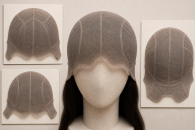
A cap can reduce direct exposure and control hair movement, but many caps are not fully watertight. Choose a size and material intended for swimming, contain long hair without sharp pins, and avoid excessive tension around fragile edges.
Test the cap during a short session. Afterward, check how much water reached the hair and whether friction, pulling, or breakage increased. Stop using a setup that causes scalp pain, repeated snagging, or visible edge damage.
Plan the post-swim rinse
Rinse promptly with clean water and allow enough flow through dense sections. Follow any swimmer’s shampoo, clarifying product, or conditioner directions exactly. A product intended for occasional mineral or chlorine residue may not be designed for every wash or for immediate use after fresh direct color.
Do not combine post-swim cleansers, color removers, and chemical color products unless the directions explicitly support the sequence. Repeated strong cleansing can remove some deposit and change feel even when it reduces residue.
Test products on representative colored hair
Use a hidden strand or saved colored swatch when practical. Record the product amount, contact time, rinse, dry result, color transfer, combing, roughness, and saturation. Compare it with a similar untreated strand exposed during the same session.
A useful test asks whether the product improves the intended variable without unacceptable color loss or dryness. It does not prove that the product neutralizes every pool condition.
Distinguish residue, cast, and true fade
Inspect the hair fully dry. Surface residue may alter shine or feel; a visible cast may affect undertone; fade reduces deposit saturation. Check whether the change is uniform or concentrated in pale, porous, or exposed zones.
Do not attempt an immediate color correction while the cause is uncertain. Document the result after an ordinary wash and compare it with the baseline. Persistent unexpected color, severe tangling, or breakage warrants professional assessment before more chemical work.
Adjust the routine by evidence
Change one variable at a time: shorter submersion, better pre-wetting, improved cap fit, quicker rinse, or a different label-supported cleanser. Keep swim duration and photography similar when comparing sessions.
The at-home hair color guide provides a broader framework for canvas checks and stop conditions. If a direct-dye kit is involved, the Splat hair dye guide offers related questions about bleach, deposit, transfer, and fade without predicting one pool outcome.
Follow hair-color and scalp boundaries
Do not color an irritated scalp immediately after a session. Follow every hair-color label, including preliminary test directions, gloves, timing, and rinsing. The FDA hair-dye guidance describes reaction limits and notes that scalp hair dye is not intended for eyebrows or eyelashes.
The American Academy of Dermatology coloring guidance recommends conservative color changes and following manufacturer testing directions. These sources do not establish a chlorine-proof routine or a universal correction method.
Pool-use checklist for colored hair
- Photograph dry color and record condition before comparable swims.
- Record pool type, duration, submersion, and other exposures.
- Wet hair evenly with clean water when practical.
- Use only label-supported barriers, cleansers, and conditioners.
- Check cap fit for water entry, friction, tension, and snagging.
- Rinse promptly and avoid stacking strong cleansing steps.
- Compare dry saturation, undertone, feel, and breakage.
- Stop for irritation, severe tangling, weakness, or unexplained color change.
A useful chlorine-protection routine is measurable and adjustable. Limit exposure, verify product directions, compare consistent dry evidence, and change one step at a time instead of relying on a single protective claim.