Velvet Wig Grips: Selection, Use, Cleaning, and Replacement

Direct answer: Choose a velvet wig grip by confirming the direction of its velvet nap, pile consistency, backing, finished width, stitched edges, closure overlap, and the maker's orientation. Fit it around prepared hair with light, even contact rather than maximum tightness. Stop if it rolls, twists, creates a pressure point, catches hair, or causes discomfort. Clean only by the stated method and replace it when the pile mats, the backing stretches, an edge roughens, or the closure no longer lies flat.
Create a velvet nap and closure baseline
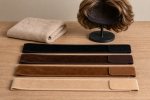
Before wear, photograph both faces of the dry band, the direction of the pile under side light, every stitched edge, the backing, and the complete closure. Record relaxed length, usable overlap, finished width, and maker orientation so later matting or stretch can be compared with a real baseline rather than memory.
Read the nap before judging the band
Velvet has a directional surface. Brush one clean finger lightly along the band in both directions and observe which direction feels smoother and which offers more resistance. Use that observation only to identify orientation; it does not prove a fixed hold time. Look for uniform pile, bare tracks, crushed zones, adhesive bleed, hard spots, and abrupt changes near the closure.
Separate pile, backing, and closure construction
Inspect the velvet face, the structural backing, edge binding, seam allowance, and hook-and-loop or other disclosed closure as separate parts. A plush surface can hide a narrow backing or bulky overlap. Flex the finished band gently without peeling layers apart. Reject exposed adhesive, loose stitching, sharp hook material, a closure that lifts, or a backing that stays creased.
Map width around the actual head shape
Compare finished width with the forehead curve, temple area, above the ears, occipital curve, and nape. A wider band may distribute contact differently but can also approach ears or fold on a tight curve. A narrow band is not automatically less noticeable or more comfortable. Record where the band remains flat before adding a wig.
Orient the closure without creating a ridge
Follow the product's front, back, nap, and closure directions. Place the overlap where it can lie flat under the wig rather than stacking over a bun, braid ridge, clip, or sensitive point. Keep hook material fully covered. Do not cut a finished grip, reverse it solely for more resistance, or add pins through it unless the maker expressly permits it.
Use a short movement check
After the wig is placed by its own directions, turn the head slowly, look up and down, sit, and repeat ordinary jaw movement. Check for rolling, closure lift, migrating edges, wig hardware pressing through the band, or hair trapped at the boundary. More pressure is not the default correction. Remove and reassess size, orientation, hair bulk, and wig fit.
Keep skin and hair signals visible
Inspect the forehead, temples, areas above the ears, and nape after a brief wear interval. Stop for pain, burning, persistent itching, swelling, numbness, increasing tenderness, bumps, or deep marks. A soft hand feel does not establish skin compatibility. Do not place the band over broken, inflamed, or otherwise concerning skin.
Remove in the low-resistance direction
Release wig combs, clips, straps, or other attachments before moving the grip. Separate the closure while supporting nearby hair. Ease the band away in the direction that produces less drag rather than pulling against the nap. Free caught strands individually. Do not snap the band off, drag hook material over hair, or use a sharp tool.
Clean without flattening the pile
Check whether the band is washable and follow its water, cleanser, agitation, rinsing, and drying directions. Close or protect the hook surface if instructed. Avoid wringing, hard brushing, high heat, and unlisted solvents. Reshape the band flat and let all layers and the closure dry completely before storage or wear.
Distinguish temporary compression from failure
After permitted drying, lift the pile only by the approved method and inspect it under side light. A temporary lay mark may recover; broad matting, bald tracks, hardened residue, fused fibers, or a polished low-friction patch indicates material change. Washing does not restore a stretched backing, abrasive edge, split seam, or distorted closure.
Retire the grip at a defined condition
Replace for persistent odor, residue, staining, incomplete drying, matted or missing pile, delamination, rough binding, loose threads, stretched backing, hardened folds, closure lift, exposed hooks, repeated rolling, painful contact, or a size that no longer stays flat. Adding a second grip does not repair the first one.
Decision table
| Checkpoint | Continue when | Stop or replace when |
|---|---|---|
| Nap | Direction is visible and pile is even | Broad matting, bald tracks, or hardened areas |
| Backing | Returns flat after gentle flexing | Stays stretched, creased, or separated |
| Closure | Overlaps flat with hooks covered | Lifts, scratches, or creates a ridge |
| Wear check | Contact remains light and even | Rolling, deep marks, pain, or caught hair |
| Care | All layers dry and recover | Odor, residue, dampness, or distortion remains |
Use scalp guidance as a stop-rule boundary
The AAD sources support avoiding repeated pulling and responding to pain or damaging tension; they do not certify velvet, rank grip designs, or establish a wear duration. The FDA overview applies only when a cosmetic cleanser or hair product is involved and does not approve this accessory.
- AAD guidance on traction from hairstyles: Use pain and repeated pulling as stop signals, not as evidence that velvet prevents traction.
- FDA overview of hair products: Check the separate cosmetic directions when cleanser or styling residue contacts the band.
- AAD precautions for weaves and extensions: Keep the eventual hair system clean and avoid a setup that relies on damaging tension.
Keep velvet-grip decisions separate from hair selection
Use the related extension pages for fiber, shade, and attachment questions. A grip inspection cannot determine extension quality, a lace match, or the maintenance limits of a separate hairpiece.
- hair crown extension planning: separates shade and placement from the velvet surface
- extension selection fundamentals: keeps fiber and attachment choices outside the grip review
- extension format overview: prevents a band decision from standing in for hairpiece maintenance
Final checklist
- Nap direction, pile consistency, backing, edge binding, and closure are identified.
- The band lies flat around the prepared head without maximum closure tension.
- Wig hardware does not press through the grip or load one small area.
- Removal follows the low-resistance direction after all attachments are released.
- The dry pile, backing, edge, and closure pass a fresh inspection before reuse.
State only what the velvet inspection shows
This page evaluates directional pile, backing, edge finish, closure, fit observations, and care condition. It does not assign a wear duration, promise skin tolerance, or claim that velvet protects a hairline. A clean flat band can still be unsuitable for an individual setup.
A velvet wig grip is a directional-pile accessory, not a universal hold claim. Keep it only while its nap, backing, edges, closure, fit, and cleanability remain observable and controlled.