Best Eyeliner Brush: Shape, Formula, and Hygiene Guide

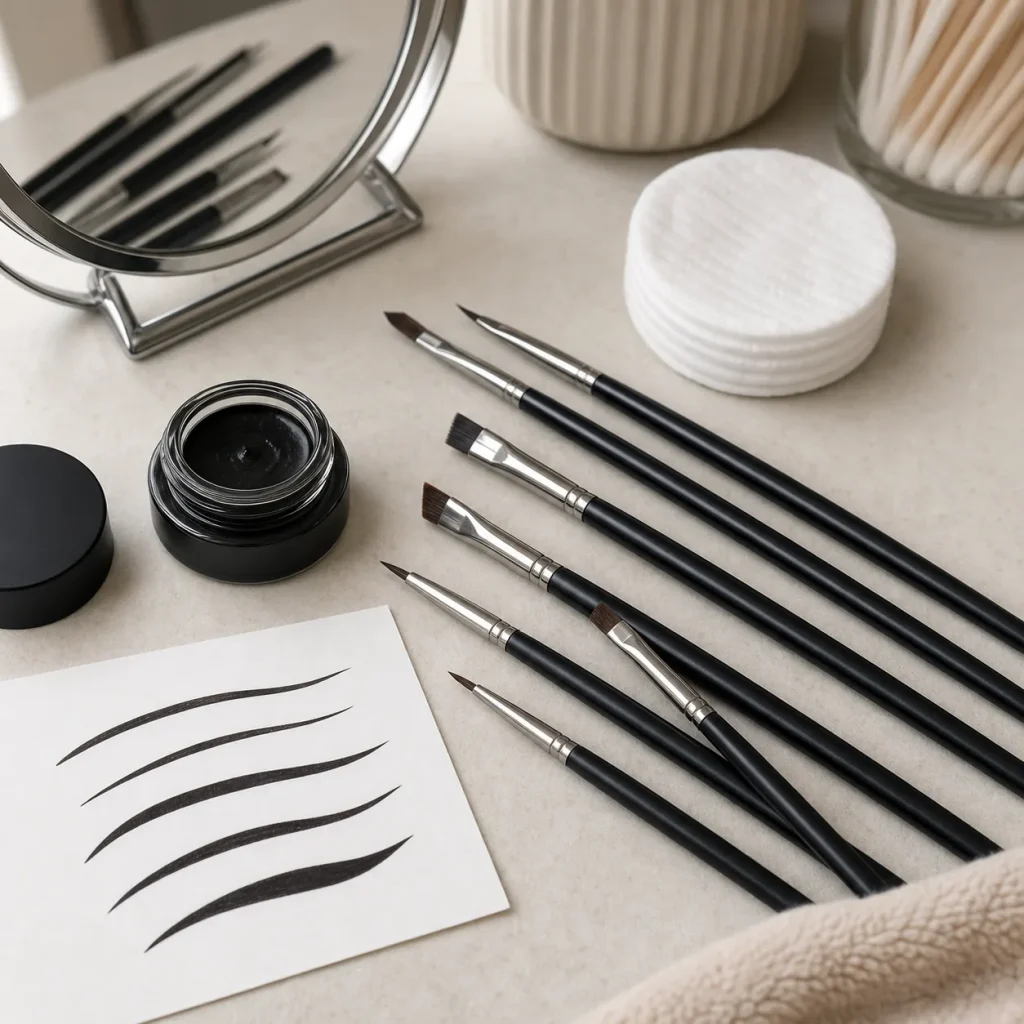
The best eyeliner brush is the one that matches your liner formula, hand control, and cleaning routine. Use an angled brush for gel or cream liner, a flat brush for tight lash-line work, a fine detail brush for small wings, and a clean smudge brush when you want a softer edge.
Quick Answer: Which Eyeliner Brush Should You Buy?
Start with one small angled eyeliner brush if you use gel, cream, or dark eyeshadow as liner. Add a flat definer brush if you like very close lash-line placement, and a fine detail brush if your main goal is a thin wing or a sharp outer corner.
| Brush shape | Best use | Works with | Control note |
|---|---|---|---|
| Angled eyeliner brush | Gel liner, cream liner, soft wings | Gel, cream, pressed shadow | Easiest all-purpose brush for most users |
| Flat definer brush | Pressing color close to lashes | Powder shadow, cake liner, gel | Good for tight, controlled placement |
| Bent eyeliner brush | Keeping your hand out of the mirror view | Liquid-style gel or cream | Useful if a straight handle blocks your sightline |
| Fine detail brush | Small wings, inner and outer corner work | Gel, cream, liquid-style pot liner | Best when you want a very thin line |
| Smudge brush | Soft smoky liner | Pencil, shadow, gel before it sets | Better for diffusing than drawing a crisp edge |
Brush Shape Guide
Brush shape matters because eyeliner is a small-placement product. A brush that feels easy on the back of your hand can still be too wide for the lash line, too floppy for a wing, or too stiff for a soft shadow liner.
Angled brush
An angled eyeliner brush is the safest first purchase because it can stamp color along the lashes, pull a short wing, and soften gel liner before it sets. Choose a narrow angled head rather than a wide brow brush if your eyes are small or hooded.
Flat definer brush
A flat definer brush presses color at the lash base instead of dragging it across the lid. It is helpful when a full line looks heavy or when you want to use dark eyeshadow as a softer liner.
Bent and detail brushes
A bent brush changes the handle angle, which can help if your hand blocks the mirror. A fine detail brush gives the sharpest line, but it also shows every hand movement, so it is less forgiving for beginners.
Match the Brush to the Formula
Do not choose the brush separately from the formula. Gel, cream, shadow, and cake liner need different pressure and cleaning habits, and that affects how precise the brush feels near the eye.
| Formula | Best brush | Why it fits | Cleaning concern |
|---|---|---|---|
| Gel liner | Angled or fine detail brush | Brush can pick up a small amount and build the line | Gel dries in bristles if left unwashed |
| Cream liner | Angled, bent, or detail brush | Needs controlled pickup and a smooth edge | Wipe between eyes if product builds up |
| Pressed eyeshadow | Flat definer or small angled brush | Presses powder close to lashes | Remove powder residue before storing |
| Cake liner | Fine detail or flat brush | Needs a brush that controls water and pigment | Do not leave damp tools sealed away |
| Pencil liner | Smudge brush as a helper | Softens the edge after pencil placement | Clean wax and pigment from the bristles |
Eye-Area Safety and Label Checks
FDA eye-cosmetic guidance focuses on using eye products as directed, avoiding shared eye cosmetics, and keeping tools clean. FDA color-additive guidance also matters because products used near the eye need colors that are permitted for that use area.
| Check | What to do | Why it matters | Conservative choice |
|---|---|---|---|
| Eye-area label | Use liner products intended for eyes | Face, lip, craft, and novelty colors are not automatically eye products | Pick eye-labeled gel, cream, or shadow |
| Clean tool | Use a clean brush before working near the lash line | Eye makeup tools collect product and skin oils | Wash reusable brushes and dry them fully |
| No sharing | Keep eyeliner brushes personal | Eye products should not be shared | Use disposable applicators for shared makeup kits |
| Dried product | Replace or discard product that changes texture or smell | Old makeup becomes harder to apply smoothly | Do not add saliva or water to revive eye makeup |
| Waterline placement | Follow the product label before using close to the inner rim | Not every eye product is intended for every placement | Keep brush liner on the lash line unless directions say otherwise |
How to Choose Bristles, Size, and Handle
A good eyeliner brush should feel small, springy, and easy to clean. Very soft bristles can bend before they place color, while very stiff bristles can feel scratchy and make the line skip.
- Bristle firmness: Choose slight firmness for gel or cream so the brush keeps its edge.
- Brush width: Choose a narrow head if you want a thin line or have limited lid space.
- Handle length: Short handles can be easier close to a mirror; long handles can feel steadier when you rest your elbow.
- Edge shape: A clean angled edge gives better wings than a rounded, fluffy brush.
- Washability: Dense liner brushes need to rinse clean without splaying or trapping product near the ferrule.
Brushes by Makeup Goal
| Goal | Use this brush | Technique | Internal guide |
|---|---|---|---|
| Beginner daily liner | Small angled brush | Press short strokes along the upper lash line | Beginner eyeliner guide |
| Winged liner | Angled or fine detail brush | Sketch the outer flick first, then connect inward | Winged eyeliner tools |
| Soft smoky liner | Smudge brush plus flat definer | Press dark shadow, then blur only the outer edge | Brown eyeliner ideas |
| Oily lids | Angled brush with gel liner | Use less product and let it set before opening wide | Oily-lid eyeliner guide |
| Waterline looks | Use label-supported pencil first | A brush is usually better kept at the lash line | Waterline eyeliner guide |
| Sensitive eyes | Clean angled brush or soft shadow brush | Keep placement conservative and remove gently | Sensitive-eye eyeliner guide |
Cleaning Routine for Eyeliner Brushes
AAD brush-cleaning guidance is especially relevant for eyeliner brushes because gel, cream, and shadow residue sit close to the eye area. Wash brushes regularly, rinse until the water runs clear, reshape the edge, and let the brush dry fully before the next use.
- Wet the bristles with lukewarm water while keeping water away from the ferrule when possible.
- Massage a gentle cleanser through the bristles until liner residue loosens.
- Rinse thoroughly so no cleanser remains near the eye area.
- Press out water with a clean towel and reshape the edge.
- Dry the brush flat with the bristles hanging over an edge so air can circulate.
- Replace brushes that splay, scratch, shed, or no longer rinse clean.
Common Buying Mistakes
- Buying a wide brow brush and expecting it to draw a thin eyeliner line.
- Using one dirty brush for gel liner, shadow liner, and cream products without washing.
- Choosing a brush for a waterline look when the product label does not support that placement.
- Using face paint, craft glitter, or lip color near the eye because the shade looks similar.
- Keeping a splayed liner brush after it can no longer make a clean edge.
- Adding water or saliva to dried eye makeup instead of replacing it.
Sources
- FDA: Eye cosmetic safety
- FDA: Color additives and cosmetics fact sheet
- FDA: Makeup
- AAD: How to clean makeup brushes
- AAD: When to replace makeup and sunscreen
FAQ
What is the best eyeliner brush for beginners?
A small angled eyeliner brush is the easiest first brush because it works with gel, cream, and dark eyeshadow, and it can stamp color in short controlled strokes.
Is an angled brush or flat brush better for eyeliner?
An angled brush is better for most liner shapes and short wings. A flat definer brush is better for pressing color very close to the lashes or creating a soft shadow-liner look.
Can I use a brow brush as an eyeliner brush?
You can use a brow brush only if it is narrow, clean, and comfortable near the eye. Many brow brushes are too wide or stiff for precise eyeliner.
How often should I clean an eyeliner brush?
Clean reusable eyeliner brushes regularly, and clean them sooner when gel, cream, or dark shadow builds up. Eye-area tools should not be left with old product in the bristles.
Which brush is best for gel eyeliner?
A narrow angled brush or fine detail brush works well for gel eyeliner. Choose the angled brush for easier daily control and the detail brush for very thin lines.
Can I use an eyeliner brush on the waterline?
Keep brush-applied liner on the lash line unless the product directions clearly support closer eye placement. For waterline looks, a pencil labeled for that area is usually the more practical choice.
When should I replace an eyeliner brush?
Replace the brush when the edge splays, bristles shed, it feels scratchy, or product no longer rinses out cleanly.