Concealer for Acne-Prone Skin: Coverage and Fit

Quick answer: Choose concealer by the current label, desired coverage, texture, shade, finish, applicator hygiene, base compatibility, and gentle removal. Concealer can change visible color and contrast, but it does not treat acne or guarantee that pores will not clog. This independent editorial guide does not claim first-hand product testing, diagnose, prescribe, or guarantee a result.
Decide what coverage should accomplish
A red inflamed spot, flat post-acne mark, raised healing area, dry patch, and indented scar create different color and texture challenges. Concealer can reduce contrast but cannot flatten a raised lesion or fill a scar invisibly under every light. Define a realistic target such as reducing redness for ordinary viewing.
Full coverage is optional. Sheer spot coverage can be more stable and easier to remove. Avoid pressing makeup onto open, bleeding, draining, or infected-looking skin. Significant pain, widespread inflammation, or scarring needs appropriate treatment rather than heavier camouflage.
Read the complete formula and label
Liquid, cream, stick, pot, serum, and pencil formats differ in emollients, waxes, pigments, film formers, preservatives, and applicators. Terms such as acne-friendly, noncomedogenic, oil-free, or hypoallergenic do not guarantee individual tolerance or treatment.
Check intended body area, ingredient declaration, warnings, opening life, package seal, and manufacturer. Fragrance, active ingredients, and the complete base can matter. Avoid testers or decants with unknown hygiene and replace products that change smell, texture, color, or packaging integrity.
Match shade by color and depth
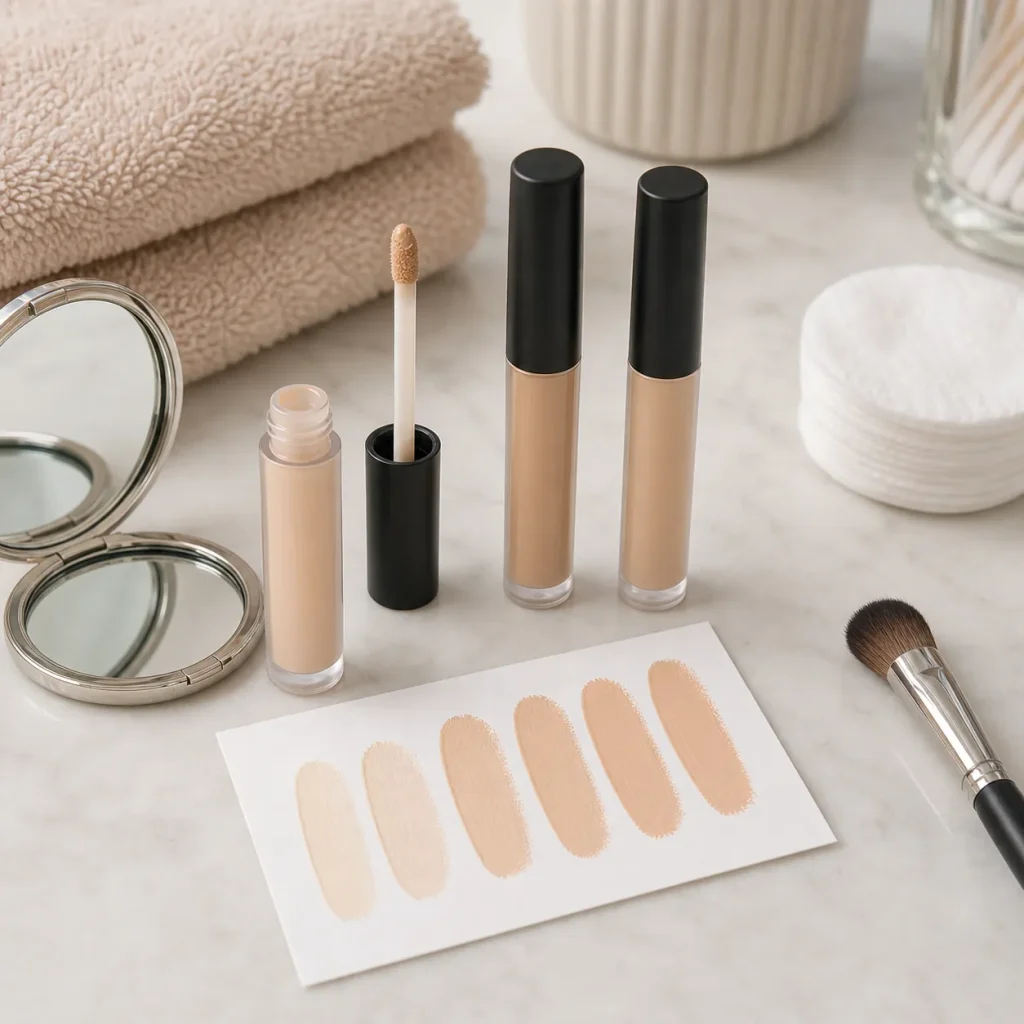
For spot concealing, a shade close to the surrounding skin often creates less visible contrast than a much lighter under-eye shade. Compare face, jaw, neck, and chest where relevant, then observe dry-down and oxidation in neutral light.
Green or other correctors can reduce visible color through layering, but too much creates another hue to cover. Test a small amount under the chosen concealer. A color wheel is a starting concept, not a rule that every red lesion needs opaque green.
Prepare skin without stacking irritants
Use the existing acne and moisturizer routine as directed, allow layers to settle, and apply sunscreen when appropriate. Do not add several exfoliants, spot treatments, primer, and concealer at once. Peeling and burning can be worsened by friction and repeated correction.
If a clinician has prescribed treatment, keep its dose and timing separate from cosmetic experimentation. Concealer should not be mixed into medication. When treatment creates dryness, ask how to adjust the routine rather than sealing irritation under more makeup.
Use hygienic spot application
Avoid touching a doe-foot directly to an inflamed lesion and returning it to the tube when a clean palette or disposable applicator can be used. Wash hands, clean reusable brushes, and do not share concealer. Keep caps and pot rims free of old product.
Deposit a small amount, let it settle as the formula directs, and blend the edge rather than rubbing the center repeatedly. Build only where needed. Thick layers can crack, transfer, and emphasize texture without improving ordinary-distance coverage.
Choose finish from the lesion and surrounding skin
Matte formulas can reduce shine but may catch on dry healing areas; emollient formulas can move on oily zones; flexible films can balance wear and comfort. The best finish can vary across the same face. Use powder only where it improves stability.
Inspect in side light and during facial movement. Visible texture is normal, and poreless claims should be understood as optical. Stop adding product when extra layers make the area more raised, dry, or obvious.
Test compatibility with primer and foundation
Concealer can sit under or over foundation depending on formula and technique. Test the actual sunscreen, primer, base, concealer, and powder together. Pilling, separation, darkening, and patchiness can come from layer interaction rather than the concealer alone.
Use a split test and change one layer at a time. If spot coverage works alone, consider leaving the surrounding base lighter. A full-face high-coverage system is not required to make one concealer perform.
Track wear without promising all day
Observe transfer, oil breakthrough, dryness, cracking, color shift, and fading under the conditions that matter: masks, glasses, heat, photography, or ordinary work. Record touch-ups and avoid picking or rubbing the lesion through the makeup.
A concealer that fades evenly and remains comfortable can be a better fit than one that holds rigidly while irritating skin. Stop for persistent itching, burning, swelling, rash, or a consistent breakout pattern after introduction.
Remove coverage without scrubbing acne
Use a remover compatible with long-wear pigments and give it directed contact time. Press and lift rather than repeatedly abrading an inflamed spot, then cleanse as the routine requires. Keep cloths and pads clean and avoid reusing a contaminated section.
After removal, inspect the skin and return to the stable routine. Record the formula, application tool, wear, removal effort, and any reaction. Choose from that evidence and recheck live commercial details; no concealer universally treats or suits acne-prone skin.
Use spot coverage without building a heavy mask
After base products settle, place a small amount of concealer only on the visible area and soften the edge with a clean tool. Letting a compatible formula set briefly can improve coverage without repeated layers, but the exact timing depends on the product directions and finish. Powder only where transfer or shine requires it rather than automatically coating the entire face.
Clean fingers, brushes, and sponges on an appropriate schedule and avoid returning a used applicator to a pot when hygiene is uncertain. Remove makeup gently at the end of wear and observe whether a new formula coincides with stinging, persistent redness, or a worsening breakout pattern. Discontinue a suspected irritant and seek professional guidance for severe, painful, scarring, or persistent acne.
Separate color correction from concealing
A color corrector and a skin-tone concealer perform different jobs. Use correction sparingly only when discoloration remains visible through a normal concealer layer, and confirm that the formulas layer without pilling. More pigment is not a treatment for acne, and covering a lesion should never require squeezing, scraping, or applying makeup over broken skin.
Related Beauty Supply Reviews guides
Editorial sources
- https://www.aad.org/public/diseases/acne/causes/makeup
- https://www.fda.gov/cosmetics/cosmetic-products/makeup