Eyeliner for Sensitive Eyes: Formula and Use Guide

Quick answer: For sensitive eyes, start with eye-area labeling, a controllable applicator, clean packaging, and gentle removal. No eyeliner formula can be guaranteed irritation-free for everyone. This independent editorial guide does not claim first-hand testing, does not diagnose or prescribe, and does not promise a particular result.
Define sensitivity before choosing a format
Dryness, allergies, contact-lens wear, prior reactions, recent procedures, and active eye disease are different constraints. A cosmetic label cannot diagnose the cause. Compare pencil, gel, liquid, and powder by placement and removal needs rather than assuming one format is always gentler.
Keep placement within labeled eye use
Check whether the product is intended for the outer lash line, waterline, or another specific area. Do not move craft pigments, lip products, or products with unclear eye-area directions closer to the eye because a tutorial does so.
Prioritize control over dramatic payoff
A stable tip and moderate flow reduce repeated passes and accidental contact. Test the mechanism away from the eye when appropriate, cap it promptly, and stop using a frayed, splintered, leaking, or dried applicator.
Treat eye symptoms as a stop signal
Remove the product and stop use for persistent redness, pain, swelling, discharge, marked watering, light sensitivity, or vision change. Do not keep applying a product to decide whether the reaction will settle.
Define what sensitive eyes means today
Dryness, contact lenses, seasonal allergy, eyelid dermatitis, recent surgery, infection, and a reaction to one cosmetic are different situations. A hypoallergenic or ophthalmologist-tested claim does not guarantee tolerance. If eyes are currently red, painful, swollen, crusted, unusually watery, light-sensitive, or changing vision, skip eyeliner and obtain appropriate assessment instead of testing another formula.
Choose placement before choosing a format
Upper lash line, outer corner, tightline, and waterline place product at different distances from the eye. Buy only a product whose current label permits the intended area. Sensitive users may prefer keeping color outside the lash roots rather than applying along the waterline. A waterproof claim does not grant permission for internal eyelid placement or contact-lens contamination.
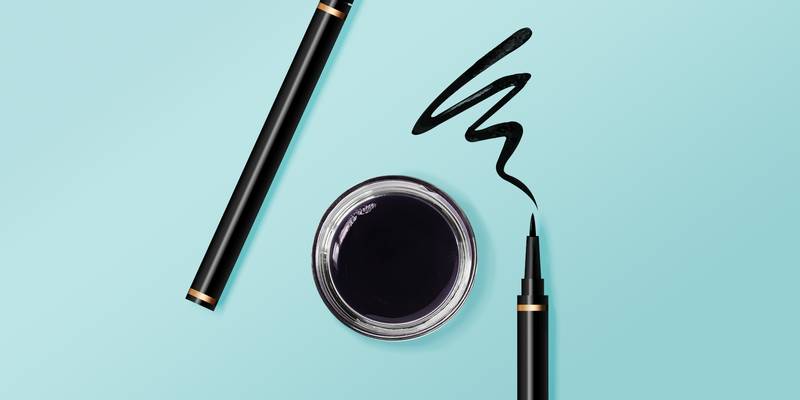
Compare pencil, gel, liquid, and powder control
A soft pencil can apply with low precision demands but may smudge; a hard pencil may tug. Liquid provides a sharp line but can flow toward the eye. Gel in a pot depends on a clean brush, while powder can create fallout. Select the format that requires the least repeated correction on the actual lid, not the one with the most dramatic swatch.
Inspect applicator condition and edge
A dried felt tip, splintered wooden pencil, sharp plastic casing, rough brush, or loose cap can make a suitable formula unsafe to apply. Sharpen only with a clean tool intended for that pencil and remove debris. For pot liner, inspect the eyeliner brush point before every use. Retire tools that scratch or shed.
Patch-test skin only within product directions
A skin patch may identify some irritation but cannot reproduce exposure at the eye or guarantee tolerance. Follow label guidance and never intentionally place a test product into the eye. Introduce one new eye cosmetic at a time and record the exact product, placement, wear time, contacts, remover, and symptoms. Stop rather than repeating exposure to prove causation.
Keep contact-lens handling separate
Wash and dry hands before lenses and makeup, follow eye-care professional guidance about application order, and keep liner off the lens. Do not use a cosmetic after it has contacted a dropped lens or contaminated surface. If product reaches a lens or vision becomes blurred, remove and manage the lens according to professional and manufacturer guidance.
Apply with short strokes and minimal correction
Stabilize the elbow, look slightly downward, and place short strokes along the labeled external area. Avoid pulling the eyelid hard or passing repeatedly over one spot. Build thickness only after the first line sets. A brown liquid eyeliner can offer softer contrast, but pigment color alone does not predict eye comfort.
Keep eye cosmetics personal and closed
Do not share eyeliner, pencils, pots, brushes, or testers. Close packages promptly and store them as directed. Never add water, saliva, oil, or eyedrops to revive a dry formula. Replace a product after an eye infection according to professional guidance and discard it when smell, texture, flow, color, or package integrity changes.
Clean reusable brushes completely
Remove cream or gel residue with a cleanser compatible with the bristles, rinse thoroughly, reshape, and dry fully before closed storage. A damp brush can contaminate a pot and produce a rough line. Professional makeup requires an appropriate sanitation system and disposable applicators where needed; wiping a shared brush on tissue is not adequate cleaning.
Plan gentle removal before long-wear use
Waterproof or film-forming liner may reduce smudging yet require more removal effort. Use a remover labeled for the eye area and formula, allow it time to loosen the line, and wipe without scraping lashes or lid margins. If removal repeatedly causes redness or swelling, the long-wear benefit may not justify that format for the routine.
Separate cosmetic irritation from eye disease
Burning, pain, discharge, persistent redness, swelling, light sensitivity, vision change, or a feeling that something remains in the eye is a stop signal. Remove exposure as directed and seek appropriate care. This independent guide cannot diagnose allergy, infection, dry-eye disease, corneal injury, or contact-lens complications and does not recommend medical treatment.
Keep a short product-response record
Note formula type, shade, application area, contact-lens status, wear duration, weather, removal method, and symptoms during and after wear. Compare only one changed variable at a time. A product used comfortably once is not guaranteed forever, and one reaction does not establish which ingredient caused it without appropriate evaluation.
Sensitive-eye eyeliner checklist
- Current symptoms do not require assessment before makeup.
- The label permits the exact intended eye-area placement.
- Format and applicator minimize tugging, fallout, and correction.
- Contact lenses, tools, testers, and package hygiene are controlled.
- Removal is gentle enough for repeated real-world use.
- Pain, discharge, light sensitivity, or vision change stops use.
Editorial sources
- https://www.fda.gov/cosmetics/cosmetic-products/eye-cosmetic-safety
- https://www.fda.gov/cosmetics/resources-consumers-cosmetics/using-cosmetics-safely